
Alcohol Units Explained:
The Truth About How Much You’re Really Drinking
Understanding alcohol units is the foundation of reducing drinking safely and sustainably.
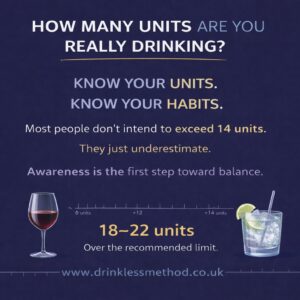
In the UK, the recommended guideline is no more than 14 units per week, ideally spread across several days. Yet many people unintentionally exceed this amount — not because they lack discipline, but because they misunderstand how units are calculated.
A unit is not a drink. It is a measure of pure alcohol. And once you begin calculating properly, the totals often surprise people.
What Is an Alcohol Unit?
One unit equals 10ml (8g) of pure alcohol.
The number of units in a drink depends on:
- The volume of the drink
- The alcohol strength (ABV)
For example:
- A 175ml glass of 13% wine = approx. 2.3 units
- A 250ml large glass = around 3 units
- A pint of 5% beer = approx. 2.8 units
Two large glasses of wine in one evening can equal 6 units. Repeat that three times per week and you have already exceeded the 14-unit guideline — before accounting for weekends.
Why Most People Underestimate Their Alcohol Intake
People usually count:
- Glasses
- Bottles
- Social occasions
They rarely calculate:
- Alcohol strength
- Exact glass size
- Weekly totals
This gap creates a pattern where moderate drinking gradually becomes excessive drinking — without feeling dramatic or problematic.
Many people who later seek alcohol reduction support say the same thing:
“I didn’t realise how much it was adding up.”
The Five Most Common Alcohol Unit Misunderstandings
To help clarify the issue, we explore five key themes:
- How many units are you really drinking?
- Alcohol units for women — why wine adds up quickly
- Alcohol units for men — how pints escalate weekly totals
- “I only drink at weekends” — why frequency isn’t everything
- Know your units. Know your habits.
Each of these addresses a different pattern of underestimation and offers practical steps for cutting down alcohol safely.
When Awareness Alone Isn’t Enough
For some people, simply tracking alcohol units is enough to reduce drinking. For others, the difficulty arises after the first drink.
Many people say:
“I can decide not to drink — but once I start, I struggle to stop.”
This is not simply about willpower. Alcohol activates the brain’s reward pathway, stimulating dopamine and endorphins. Over time, this reinforcement makes repetition more likely.
Naltrexone is a clinically researched medication used in alcohol reduction. It works by blocking opioid receptors involved in alcohol reward and reinforcement. Over time, this can weaken the association between alcohol and pleasure, helping reduce cravings and binge patterns.
Importantly, it does not require complete abstinence. It supports controlled drinking reduction when used appropriately under clinical supervision.
The Health Benefits of Reducing Alcohol Units
Reducing alcohol intake has been associated with improvements in:
- Sleep quality
- Energy levels
- Mood stability
- Weight management
- Long-term cardiovascular and liver health
Even modest reductions in weekly units can have measurable benefits.
Alcohol Reduction Is About Control — Not Perfection
Cutting down alcohol does not require dramatic declarations or lifelong abstinence.
It begins with:
- Understanding your weekly units
- Identifying patterns
- Setting realistic targets
- Seeking appropriate support when needed
Understanding units gives you clarity.
Clarity gives you choice.
Choice gives you control.
Explore the Full Alcohol Unit Series
To dive deeper, read:
- How Many Units of Alcohol Are You Really Drinking?
- Alcohol Units for Women
- Alcohol Units for Men
- “I Only Drink at Weekends”
- Know Your Units. Know Your Habits
Together, these resources provide a structured approach to alcohol reduction in the UK — combining awareness, behavioural strategy, and evidence-based medical insight.