
The Brain Learns Through Reward
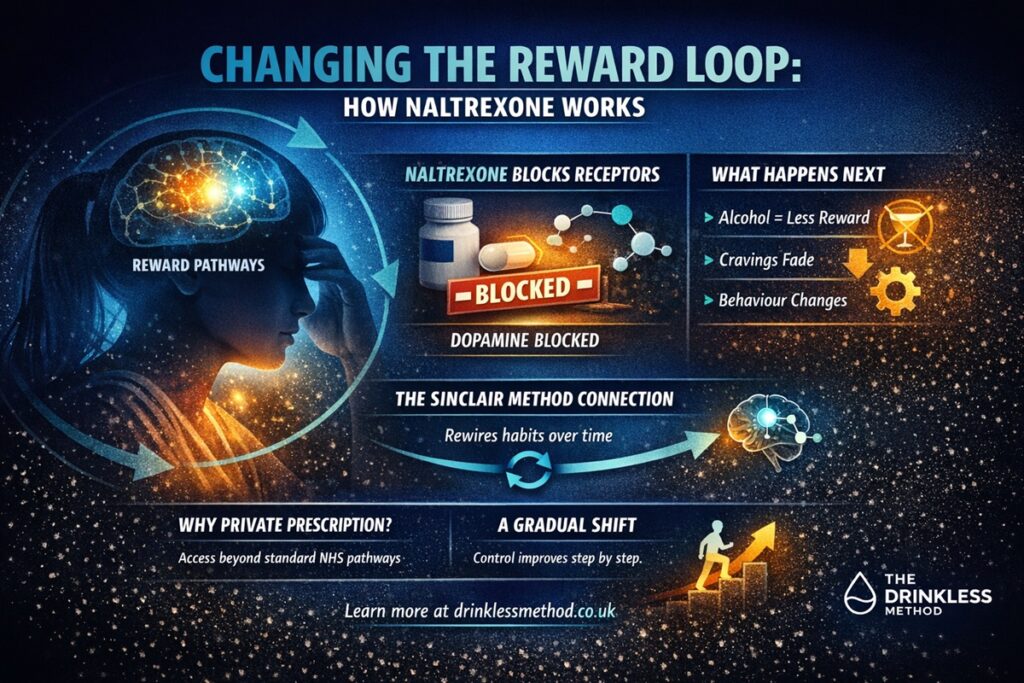
Habits form because the brain learns through repetition and reinforcement. With alcohol, each drink activates dopamine pathways — the brain’s reward system — strengthening neural connections that associate drinking with pleasure. Over time, this creates a powerful behavioural loop:
Drink → Reward → Repeat
This loop becomes ingrained, making it harder to stop even when the intention is to cut back.
Breaking the Cycle
Naltrexone works by blocking opioid receptors involved in the reward process. These receptors play a key role in triggering dopamine release when alcohol is consumed. By interrupting this pathway, naltrexone reduces the pleasurable reinforcement that drives continued drinking.
What Happens Next
With repeated use, the brain begins to “unlearn” the association between alcohol and reward. This process leads to:
- Reduced cravings
- Less reinforcement from drinking
- A gradual shift in behaviour
The Sinclair Method Connection
This approach reflects the principles of the Sinclair Method, a treatment strategy known as pharmacological extinction. Instead of relying on abstinence or willpower alone, it uses targeted medication to weaken the reward loop over time.
Why Private Prescription Matters
In the UK, access to naltrexone through standard NHS routes is limited. Private prescription provides a pathway for appropriate patients to access treatment following clinical assessment. This ensures personalised care and timely support.
A Gradual Shift
Change doesn’t happen overnight. But with consistent use, many people find they:
- Drink less
- Stop earlier
- Feel more in control
- Experience fewer cravings
This approach offers a realistic, science-backed path to moderation — working with the brain rather than against it.