
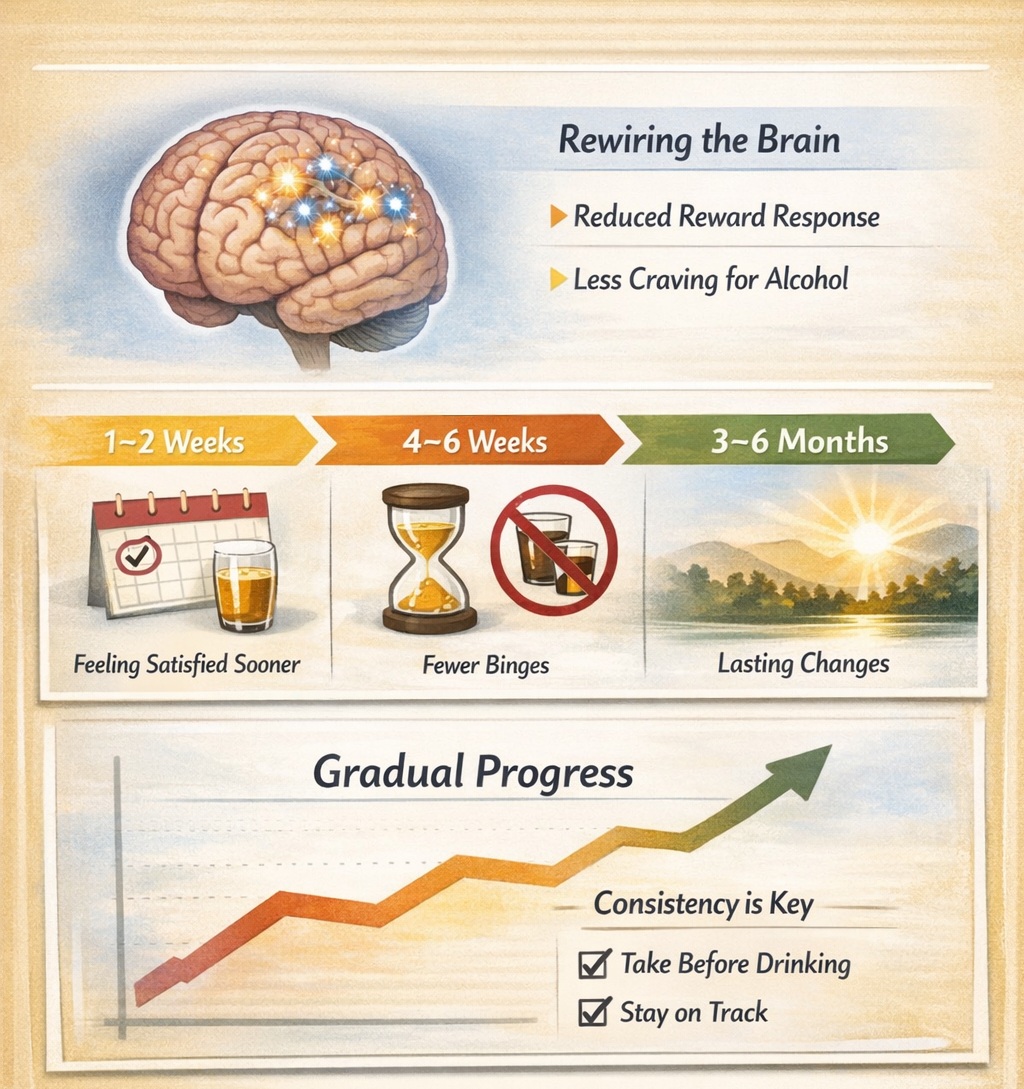
One of the most common questions people ask when starting treatment is: How long does medication take to work?
The answer varies from person to person, but understanding the mechanism helps explain the timeline.
At the full 50mg dose, Naltrexone works by blocking opioid receptors in the brain that are involved in alcohol’s reward pathway. When alcohol is consumed, these receptors would normally release endorphins and dopamine — reinforcing the pleasurable effects of drinking.
By blocking this response, the medication reduces the reinforcement associated with alcohol.
However, this neurological change is gradual rather than immediate.
Because drinking habits are learned behaviours built over time, the brain requires repeated experiences of reduced reward before the association weakens. This process is known as pharmacological extinction.
Some individuals notice early changes within the first 1–2 weeks, such as:
- Feeling satisfied sooner
- Less urge for another drink
- Reduced binge episodes
For others, changes become clearer over:
- 4–6 weeks
- Continued improvement over 3–6 months
Consistency is key. The medication should be taken as prescribed — typically prior to drinking — to allow the reward pathway to weaken progressively. If there are few improvements, the participant should increase to the recommended 50mg dose.
Importantly, it is not designed as an instant “switch off.” Instead, it works cumulatively, supporting long-term alcohol reduction rather than short-term suppression.
Because naltrexone is a prescription medication in the UK, treatment should always follow clinician guidance to ensure safety and suitability.
Over time, many people find that drinking patterns shift naturally — requiring less willpower and feeling more controlled.
Understanding the timeline helps set realistic expectations and supports continued engagement with the process.
Read more on our What is Naltrexone Page