
Many people assume that cutting down drinking is purely a matter of willpower. If you want it badly enough, you should be able to stop — or so the thinking goes.
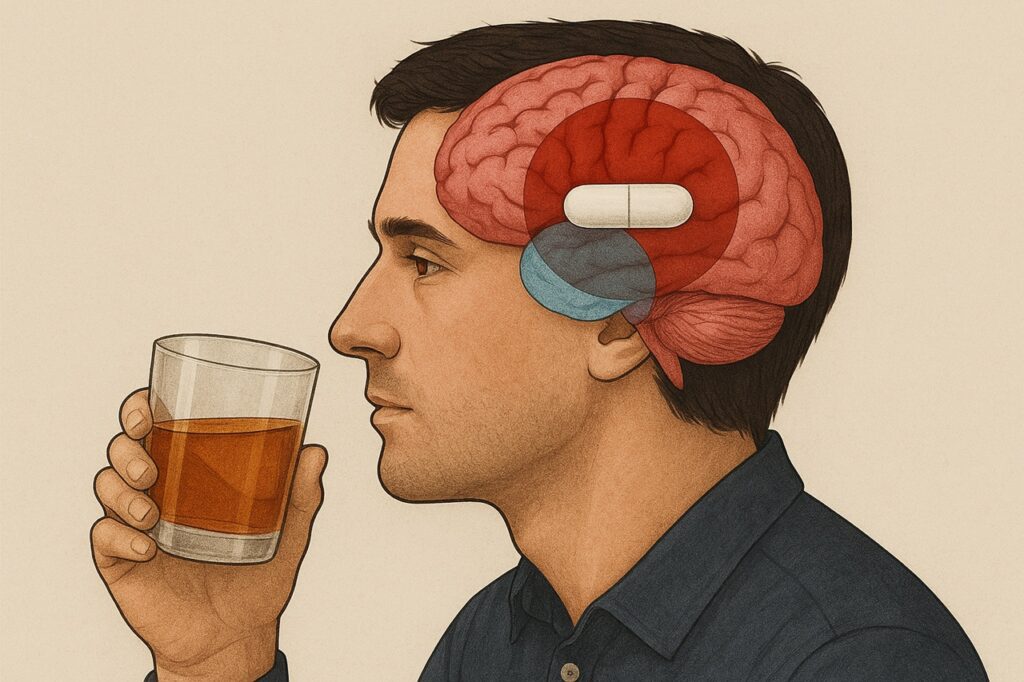
But alcohol habits are not formed by behaviour alone. They’re reinforced by neurological reward pathways in the brain.
Every time you drink, alcohol triggers the release of endorphins and dopamine — chemicals linked to pleasure and reinforcement. Over time, the brain begins to associate alcohol with relief, reward, and relaxation. This learned link is what drives the urge to continue drinking beyond the first glass.
Naltrexone at 50mg doses works by interrupting that cycle.
It is an opioid-receptor antagonist, meaning it blocks the receptors in the brain responsible for the endorphin “reward” response. When alcohol is consumed while naltrexone is active, the pleasurable reinforcement is significantly reduced.
Importantly, alcohol still tastes the same and its physical effects remain — but the psychological pull to keep drinking weakens.
Used consistently over time, this creates a process known as pharmacological extinction. The brain gradually “unlearns” the association between alcohol and reward. What once felt compelling begins to feel neutral — or even uninteresting.
People often describe the change as subtle but powerful:
- Feeling satisfied sooner
- Losing interest in finishing drinks
- Not thinking about the next glass
- Stopping without effort
This neurological shift is why the approach focuses on gradual reduction rather than immediate abstinence.
Rather than forcing change through restraint alone, naltrexone works with the brain’s learning systems to reshape behaviour over time.
For many, it feels less like fighting temptation — and more like regaining control.
Read more on our What is Naltrexone Page