
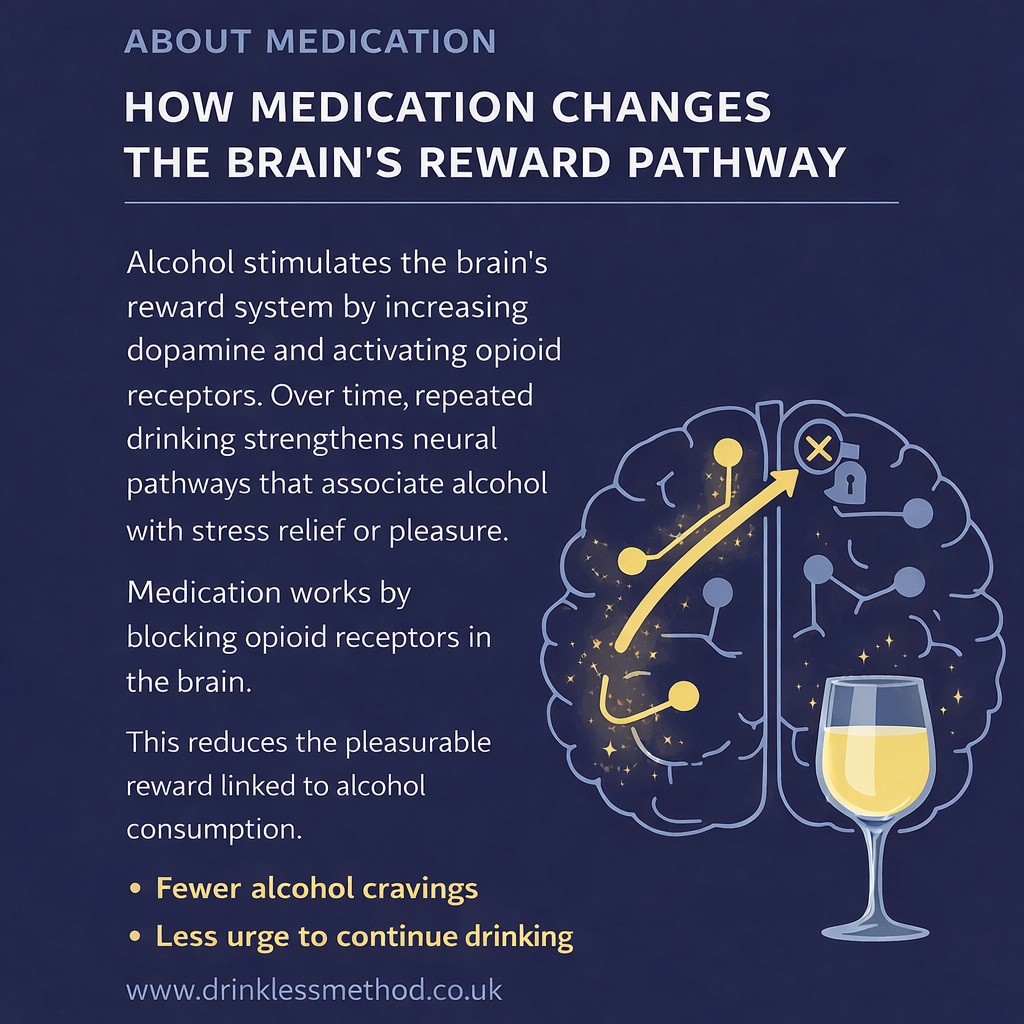
To understand how naltrexone helps with alcohol reduction, it’s important to understand how alcohol affects the brain.
When you drink alcohol, your brain releases endorphins. These chemicals activate opioid receptors and increase dopamine levels in the brain’s reward system. This creates the pleasurable feeling associated with drinking. Over time, repeated alcohol use strengthens this neurological pathway, reinforcing the link between alcohol and reward.
This is why cutting down drinking can feel difficult — even when motivation is strong. The brain has learned to expect pleasure.
At a 50mg dose, the medication works by blocking opioid receptors, particularly the mu-opioid receptor involved in alcohol’s rewarding effects. When these receptors are blocked, alcohol produces less reinforcement. You may still feel relaxed, but the strong “reward response” is reduced.
With consistent use before drinking, this leads to a process known as pharmacological extinction. Gradually, the brain weakens its learned association between alcohol and pleasure.
As this neurological shift occurs, many people report:
- Reduced alcohol cravings
- Less urge to continue drinking
- Greater ability to stop after one or two drinks
- Fewer binge episodes
Importantly, medication does not rely solely on willpower. Instead, it addresses the biological reinforcement mechanism behind habitual drinking.
Because naltrexone is a prescription medication in the UK, it should only be used following medical assessment to ensure safety and suitability.
Understanding how our medication works in the brain helps explain why alcohol reduction is often more successful when neuroscience is addressed — not just behaviour alone.
Read more on our What is Naltrexone Page