
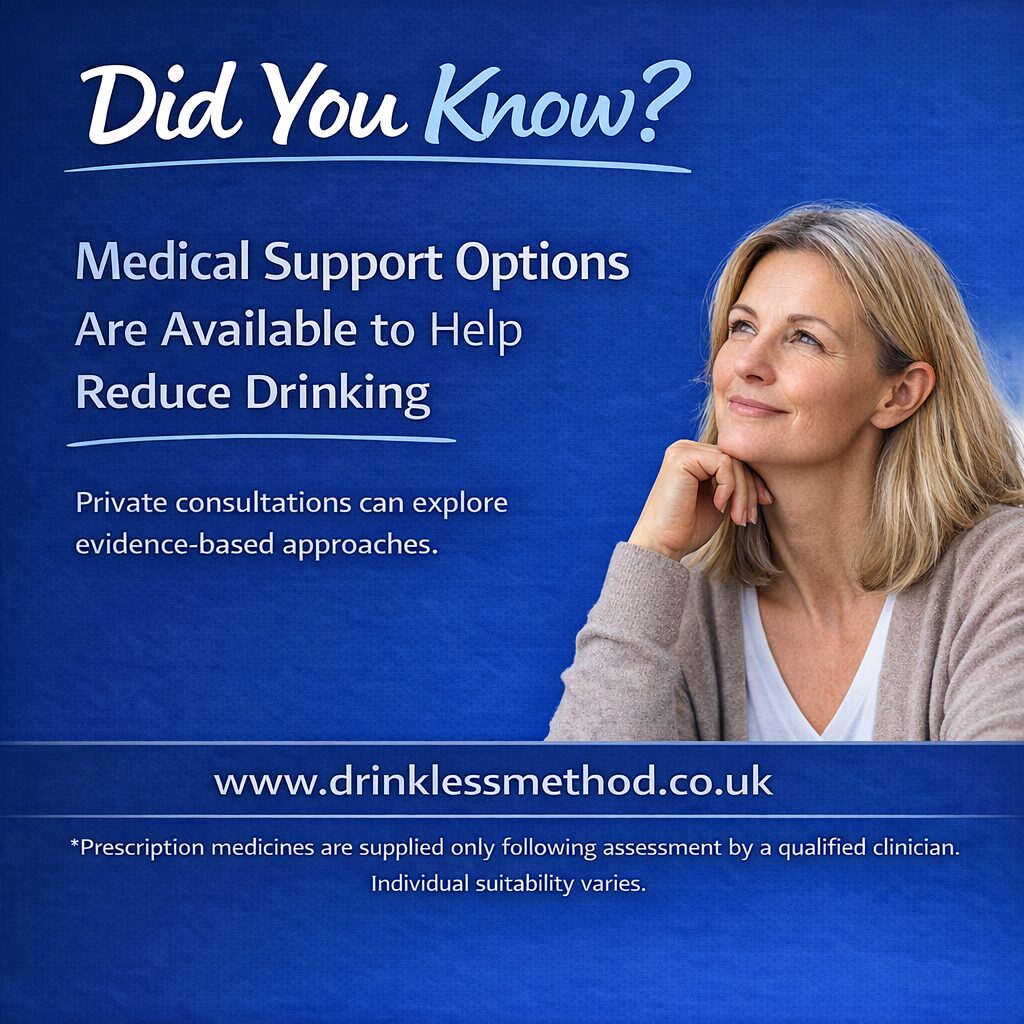
Many people reach a point where they begin to question their drinking habits. It may not feel like a serious problem, but the pattern has gradually increased over time. A drink after work becomes two. Weekend social drinking becomes a routine. Before long, many people realise they are drinking more than they intended.
The good news is that there are now several evidence-based approaches available for people who want to reduce drinking and regain control.
Reducing drinking does not necessarily mean stopping completely. For many adults, the goal is simply to feel more in control of when they drink and how much they drink.
Understanding Alcohol Habits
Alcohol interacts with the brain’s reward system. When we drink, chemicals such as dopamine and endorphins are released, producing feelings of relaxation and reward. Over time, the brain begins to associate alcohol with these positive effects.
This is why many people find it easy to intend to drink less but harder to stop once they begin.
Understanding the neurological basis of alcohol habits is an important step in recognising why drinking behaviour can become ingrained.
Lifestyle and Behavioural Strategies
Many people successfully reduce their alcohol intake by making small lifestyle adjustments.
Common strategies include:
- tracking alcohol units
- changing evening routines
- reducing “habit drinking” triggers
- spacing out drinks
- alternating with non-alcoholic options
These approaches can be effective for some individuals, particularly when the drinking habit has not become deeply established.
Evidence-Based Medical Approaches
Researchers have studied alcohol treatment approaches for many decades. One medication frequently discussed in this context is naltrexone, which has been used internationally in alcohol treatment programmes. Naltrexone works by interacting with the opioid receptors involved in the brain’s reward pathway. This mechanism has been studied in clinical research examining how alcohol reinforcement occurs.
Because naltrexone is a prescription-only medicine, it can only be supplied following assessment by a qualified clinician. Private consultations may allow individuals to explore whether such approaches may be appropriate for them.
Explore the Full Series
This guide forms part of a series exploring alcohol reduction:
- Private Prescription Options for Alcohol Reduction
- Can Medication Be Prescribed Privately?
- Reducing Drinking Without Giving Up Alcohol
- Alcohol Reduction Treatments and the Science Behind Them
Each article explains a different aspect of understanding alcohol habits and the options available to people who want to regain control.