
What Is The Sinclair Method?
As explained by Dr. John David Sinclair himself, a pioneering researcher in this field who said:
Dr. John David Sinclair
“The Sinclair Method uses the nervous system’s own mechanism, called ‘extinction,’ for gradually removing the interest in alcohol and the behaviours involved in alcohol drinking”
In simple terms, alcohol dependence isn’t just about withdrawal or lack of discipline — it’s a learned habit built in the brain’s reward system. Every time we drink, the brain releases endorphins (natural feel-good chemicals) that reinforce the behaviour. For some people, genetic and biological factors make this reinforcement loop much stronger, which is why simply ‘stopping’ can feel difficult or impossible.
How It Works
The breakthrough behind TSM is that it uses a medication, such as naltrexone, to temporarily block the brain’s reward response before you drink. When you take the medication as prescribed — usually about an hour before consuming alcohol — it prevents those endorphins from creating the usual sense of reward.
With continued use, the brain gradually unlearns the connection between alcohol and pleasure, reducing cravings and compulsion. It is simply helping the brain break habits.
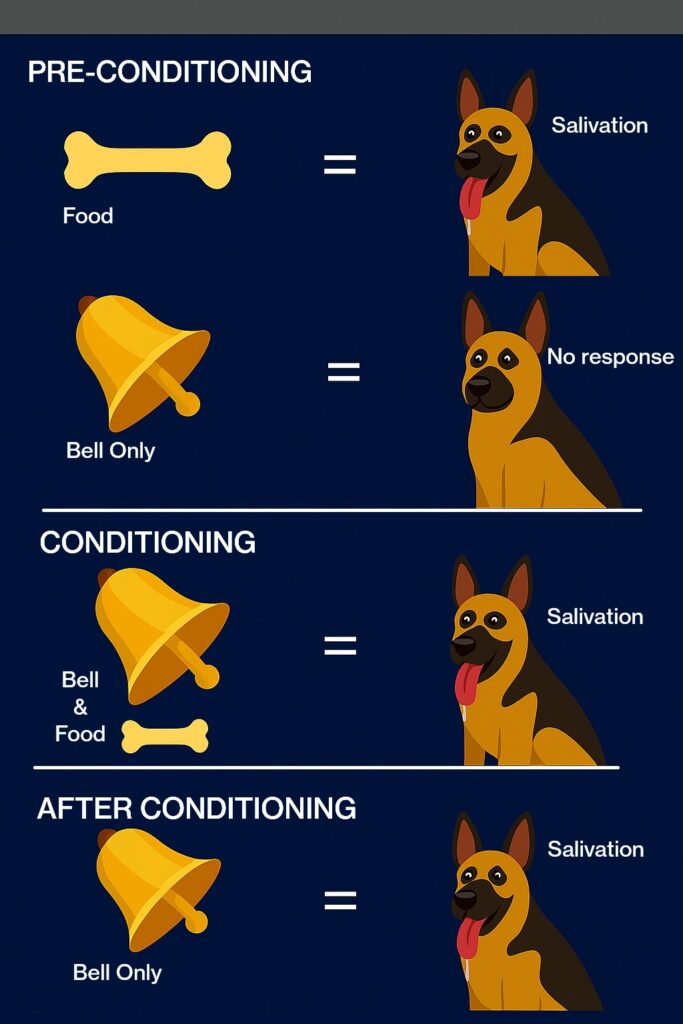
Why It Works – Pavlov’s Dog
Think of Pavlov’s famous dogs: they learned to salivate when they heard a bell because they expected food. When the food stopped coming, the response faded away. TSM applies a similar idea — by blocking alcohol’s reward, the brain slowly stops expecting that ‘buzz’ and, in turn, drinking loses its grip.
The Benefits of The Sinclair Method
- Targets the root cause of craving and loss of control in the brain.
- Uses safe, non-addictive medication.
- Allows you to reduce drinking gradually, at your own pace.
- No need for abstinence.
- Supported by decades of clinical research and positive outcomes (78% success rate)
The Drink Less Method
The Drink Less Method is not the Sinclair Method, but an approach that enables the participants to start on a lower dose of the medication. If the lower dose is effective, taking the increased Sinclair Method standard dose of 50mg Naltrexone may not be necessary. Where necessary, participants are able to increase the dose to the standard Sinclair Method 50mg.
The Sinclair Method in the Press
The £3 miracle pill hailed as ‘Ozempic for drinking’
Outlet: The Independent (Oct 15, 2024)
Explains why naltrexone is being talked about in the UK as an inexpensive, under-used option to reduce drinking; describes mechanisms, the Sinclair Method idea of taking it before drinking, barriers to NHS prescribing and some patient stories.
I took a pill to help fix my drinking problem
Outlet: The Telegraph (Sep 15, 2024)
Personal narrative and explainer by journalist Annabel Fenwick Elliott describing the Sinclair Method and how naltrexone was used to reduce drinking; discusses practicalities and cultural resistance.
The Science Behind Recovery: Let’s Talk About Naltrexone
Psychology Today (Apr 10, 2025)
Magazine-style explainer by Smita Das, MD, PhD, MPH, (Clinical Associate Professor at Stanford and VP of Psychiatry and Complex Care at Lyra Health) summarising how naltrexone blocks reward, its clinical uses (alcohol and opioid disorders), tolerability, and why it remains under-utilised; recommends greater clinician awareness.
Naltrexone Is the Ozempic for Alcoholism
Psychology Today (May 29, 2025)
Opinion piece by Mark S. Gold, M.D. framing naltrexone as a low-cost drug gaining renewed attention; argues for wider adoption while noting limitations.