
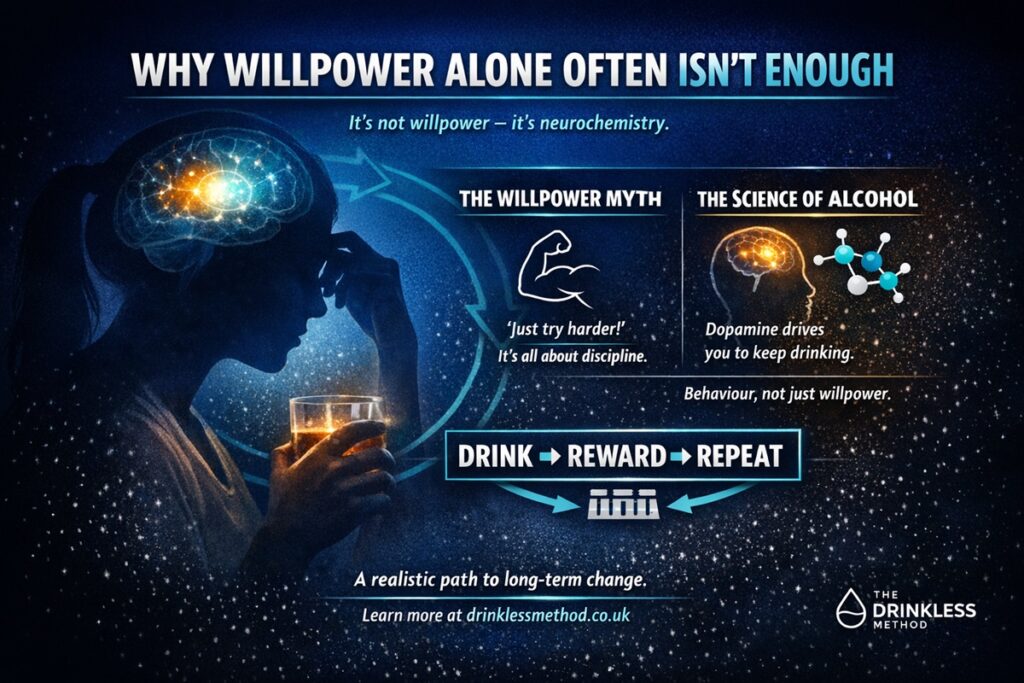
The Willpower Myth
Many people believe cutting down drinking is purely about discipline. But if that were true, it wouldn’t feel so difficult. The truth is, alcohol affects the brain in ways that override conscious intention.
The Biology of Behaviour
Alcohol activates dopamine pathways — the brain’s reward system — reinforcing behaviour beyond conscious control. Each drink strengthens the association between alcohol and reward, creating a loop that’s hard to break:
Drink → Reward → Repeat
Once this loop is activated, the brain encourages continuation, making it feel automatic rather than deliberate.
Why This Matters
Blaming willpower ignores the neurological reality. It leads to frustration, guilt and self-criticism — when the issue is biological reinforcement. Understanding this helps reframe the challenge and opens the door to more effective strategies.
How Naltrexone Changes This
Naltrexone is a medication that reduces the dopamine-driven reward response. Taken before drinking, it makes alcohol less reinforcing, helping behaviour shift naturally over time. Available via private prescription in the UK, it provides a structured, clinical approach to alcohol reduction.
A More Realistic Strategy
This approach aligns with the Sinclair Method, which works with the brain rather than against it. Over time, the brain “unlearns” the association between alcohol and reward, reducing the urge to continue drinking.
The Outcome
Many people find they:
- Stop earlier
- Drink less overall
- Feel more in control
- Experience fewer cravings
- Build confidence in their ability to moderate
The Takeaway
Willpower alone isn’t always enough — but with the right tools, change becomes possible. Understanding the biology behind drinking behaviour is the first step toward a more compassionate and effective path to control.