
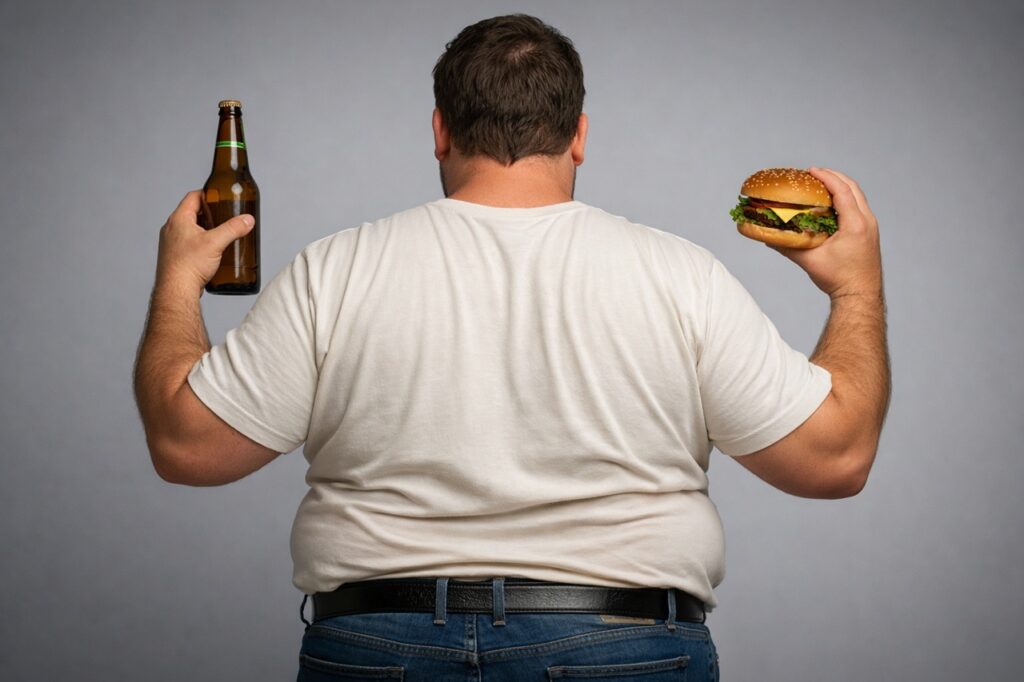
You’ve cut carbs, counted calories, and hit the gym — yet the scale barely moves. What many people overlook is how alcohol quietly undermines weight-loss efforts. Beyond its calories, alcohol affects metabolism, food choices, and energy levels in ways that can make progress frustratingly slow.
How Many Calories Are in Alcohol?
Alcohol is surprisingly calorie-dense.
Each gram of alcohol contains about 7 calories, nearly as much as fat (9 calories per gram).
| Drink | Typical Calories |
|---|---|
| Pint of lager | 180–250 |
| Large glass of wine | 220–250 |
| Bottle of wine | 600–700 |
| Cocktail | 300+ |
A person drinking two bottles of wine per week could be consuming 1,200+ extra calories — before counting mixers or snacks. Over a year, that’s a significant hidden intake.
Alcohol and Fat Storage
When alcohol enters the body, the liver prioritises breaking it down over other nutrients. During this time:
- Fat burning slows
- Metabolism becomes less efficient
- Excess calories are more likely to be stored
Even with a balanced diet and regular exercise, this metabolic slowdown can make weight loss harder.
The Hidden Effect on Food Choices
Alcohol doesn’t just add calories — it changes behaviour. After drinking, people are more likely to:
- Order takeaway food
- Snack late at night
- Choose high-calorie comfort foods
- Ignore healthy eating goals
The combination of alcohol calories and poor food choices can quickly derail progress.
Alcohol and Belly Fat
Regular drinking is often linked to increased abdominal fat due to:
- Excess calorie intake
- Hormonal changes
- Reduced fat metabolism
- Poor sleep quality
Many people notice reduced bloating and a slimmer waistline after cutting back.
Improved Energy and Activity
Alcohol can sap motivation and energy.
People who reduce drinking often report:
- Better sleep
- More consistent workouts
- Faster recovery
- Higher daily energy
These changes compound over time, supporting sustainable weight management.
Tracking Makes the Difference
Understanding alcohol’s impact starts with honest tracking. Record:
- Drinks consumed
- Alcohol units
- Calories
- Drinking occasions
Patterns often emerge that explain stalled progress — and highlight opportunities for change.
Can Medication Help?
For those struggling to reduce alcohol intake, prescription medicines such as naltrexone may help under medical supervision. These treatments can support behaviour change when willpower alone isn’t enough.
Small Changes, Significant Results
Reducing alcohol can lead to:
- Improved weight loss
- Less bloating
- Better sleep
- Higher energy
You don’t need extreme dieting — just awareness and consistency.
Start by tracking your habits, make gradual adjustments, and see how cutting back can transform your health and wellbeing.