

When people decide they want to drink less, they often look for complicated solutions — detox plans, supplements, or strict rules.
In reality, one of the most effective tools is also one of the simplest: an alcohol diary.
Recording what you drink, when you drink, and how much you drink can reveal powerful insights into your habits and motivations. It’s a small daily action that can lead to major long‑term change.
What Is an Alcohol Diary?
An alcohol diary is simply a record of:
- What you drink
- How much you drink
- When you drink
- Why you drink
You can use anything that suits your lifestyle:
- A notebook
- A spreadsheet
- A mobile app Check out our app reviews here
- Notes on your phone
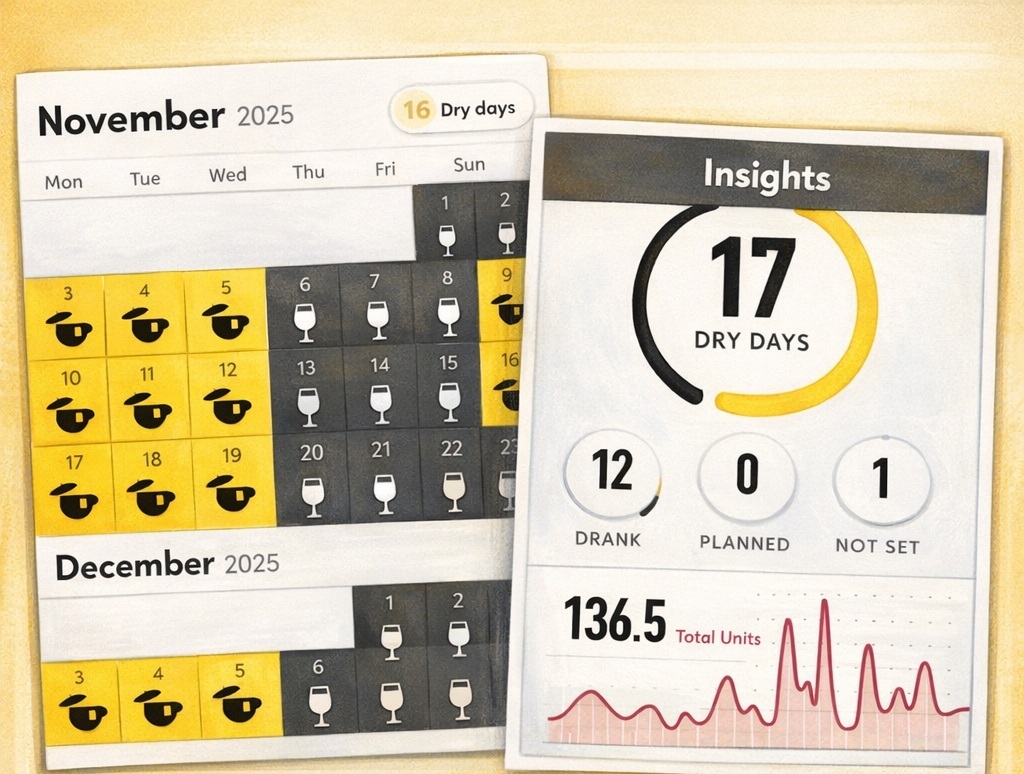
The format doesn’t matter — consistency does.
The goal is to build awareness, not perfection.
Why Alcohol Diaries Work
Many drinking habits are automatic. People often pour a drink without consciously deciding to do so.
Writing it down interrupts that autopilot behaviour.
Each entry creates a moment of reflection — a pause that turns an unconscious habit into a conscious choice.
That awareness is the first step toward meaningful change.
Identifying Triggers
One of the biggest benefits of keeping an alcohol diary is recognising what drives you to drink.
Common triggers include:
- Stress after work
- Boredom or loneliness
- Social pressure
- Habit or routine
- Celebration or reward
Once triggers become clear, they become easier to manage.
You can start replacing the drink with healthier coping strategies — a walk, a chat with a friend, or a relaxing activity.
Measuring Progress
Without tracking, it’s easy to underestimate progress.
An alcohol diary provides visible evidence of change:
- More alcohol‑free days
- Fewer drinks per session
- Lower weekly totals
- Greater sense of control
Seeing these patterns builds motivation. It turns vague goals into measurable achievements.
Understanding Alcohol Units
Many people are surprised when they calculate their true alcohol intake.
A diary helps you understand alcohol units and how they add up over time.
For example, a large glass of wine may contain three units — not one.
This awareness helps guide safer, more informed decisions.
Supporting Health Goals
Reducing alcohol can positively affect:
- Weight and metabolism
- Sleep quality
- Mood and mental clarity
- Energy levels
- Liver health
Tracking allows you to connect these improvements directly to your behaviour.
You’ll see how small reductions lead to noticeable benefits.
Combining Tracking With Treatment
For some individuals, medication may form part of a wider alcohol‑reduction strategy.
Prescription‑only medicines such as naltrexone may be considered following clinical assessment and can help some people reduce their intake.
Combining awareness, tracking, and professional support often provides a strong foundation for success.
Start Today
You don’t need specialist equipment or complicated systems.
Simply write down:
- What you drank
- How much
- When
- How you felt
After a few weeks, patterns emerge that can transform your understanding of alcohol consumption.
Sometimes the most effective changes begin with the simplest actions.
A Final Thought
An alcohol diary is not about guilt or restriction — it’s about clarity.
It helps you see your habits honestly, celebrate progress, and make informed choices.
Whether your goal is moderation or complete abstinence, awareness is the key that unlocks change.