
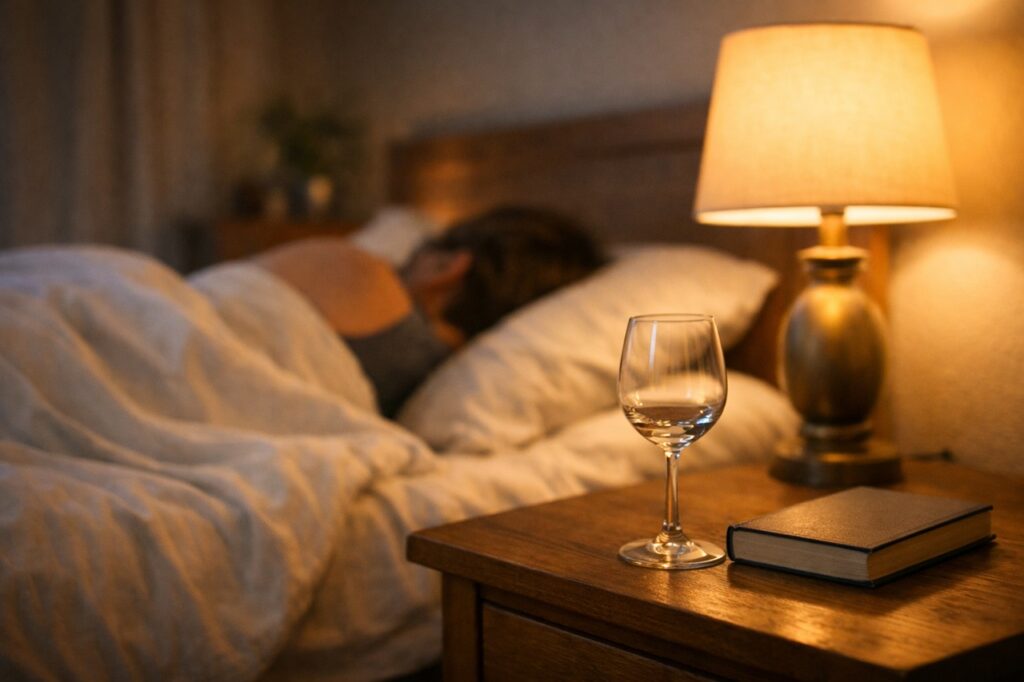
After a long day, many people reach for a glass of wine or a few drinks to unwind. Alcohol can make you feel relaxed and sleepy, which leads to the common belief that it helps you sleep better.
In reality, alcohol often does the opposite. While it may help you fall asleep faster, it disrupts the natural rhythm of your sleep cycle, leaving you tired and foggy the next morning.
Alcohol and Sleep: What Really Happens
Alcohol acts as a sedative, slowing down brain activity and creating feelings of calm and drowsiness.
However, as your body metabolises the alcohol, its effects change. The sedative phase wears off, and your nervous system becomes more active again — often in the middle of the night.
This can lead to:
- Frequent waking
- Restless sleep
- Vivid dreams
- Early morning awakenings
You might spend enough hours in bed but still wake up feeling unrefreshed.
REM Sleep and Recovery
One of the most vital stages of sleep is REM (Rapid Eye Movement) sleep — the phase where your brain processes emotions, consolidates memories, and restores mental energy.
Alcohol reduces the amount of REM sleep you get, especially in the second half of the night.
The result? You may experience:
- Brain fog
- Poor concentration
- Reduced productivity
- Emotional imbalance
Over time, this can affect your mood, memory, and overall mental health.
Alcohol and Snoring
Alcohol relaxes muscles throughout the body — including those in your throat and airway.
This can increase:
- Snoring
- Sleep‑disordered breathing
- Sleep apnoea symptoms
Even modest reductions in alcohol consumption can improve airflow and reduce snoring, helping both you and your partner sleep better.
The Sleep Benefits of Drinking Less
People who cut back on alcohol often notice improvements within weeks:
- Falling asleep naturally
- Fewer night‑time awakenings
- Better morning energy
- Improved mood
- Sharper mental clarity
These changes can be subtle at first but build steadily, leading to deeper, more restorative sleep.
Why Tracking Helps
Keeping a simple alcohol diary allows you to compare:
- Drinking days
- Sleep quality
- Morning energy levels
Patterns quickly emerge — many people realise that even small reductions in alcohol lead to noticeably better sleep.

Long‑Term Health Benefits
Better sleep doesn’t just make you feel rested. It supports your entire body:
- Stronger immune function
- Better weight control
- Lower stress levels
- Improved cardiovascular health
Reducing alcohol intake can therefore have benefits that extend far beyond sleep itself.
Additional Support
For some individuals, reducing alcohol can be challenging.
Prescription‑only medicines such as naltrexone may be considered following clinical assessment and can help some people reduce their alcohol intake.
Combining awareness, tracking, and professional support often provides the best results.
Better Sleep Starts With Awareness
The easiest place to begin is by tracking your drinking habits and noting how you feel the next morning.
Many people are surprised by how much difference a small reduction can make.
Better sleep, brighter mornings, and improved wellbeing often start with one simple choice — less alcohol tonight.