
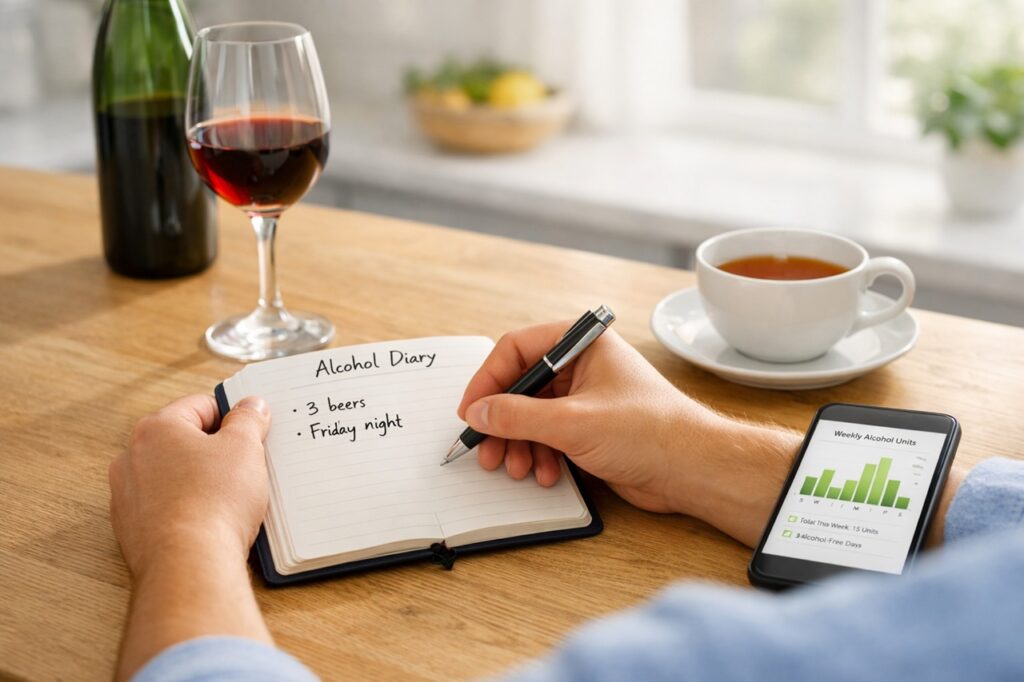
Understanding How Much You Really Drink
Many people who want to drink less believe they already have a good idea of how much alcohol they consume each week.
In reality, research consistently shows that people often underestimate both the amount they drink and the number of alcohol units they consume.
Whether your goal is to improve your health, lose weight, sleep better, or simply feel more in control, tracking your alcohol consumption is one of the most effective first steps you can take.
Why Tracking Works
When people begin recording their drinking habits, something interesting happens.
Awareness increases.
Instead of alcohol consumption being an automatic habit, it becomes a conscious decision.
Simply keeping an alcohol diary can help you:
- Identify patterns of drinking
- Recognise triggers
- Understand how much you spend on alcohol
- Monitor alcohol units
- Track alcohol-free days
- Measure progress over time
Many people discover that they drink more frequently than they originally thought.
The Hidden Impact of Alcohol on Health
Alcohol affects almost every system within the body.
Sleep
While alcohol may help some people fall asleep, it often reduces sleep quality.
Many people experience:
- More fragmented sleep
- Early waking
- Reduced deep sleep
- Daytime tiredness
Reducing alcohol intake can lead to noticeable improvements in sleep within just a few weeks.
Weight Gain
Alcohol contains significant calories. A typical bottle of wine contains around 600–700 calories.
Regular drinking can contribute to:
- Weight gain
- Increased abdominal fat
- Poor food choices
- Reduced exercise motivation
Tracking alcohol intake often helps people understand where excess calories are coming from.
Mental Wellbeing
Alcohol can influence mood, anxiety levels and concentration. Many people report improvements in:
- Energy
- Motivation
- Confidence
- Productivity
when they reduce their drinking.
Liver Health
The liver is responsible for processing alcohol.
Excessive drinking over time can contribute to:
- Fatty liver disease
- Elevated liver enzymes
- Liver inflammation
Many people choose to combine alcohol reduction with blood testing to establish a baseline and monitor progress.
Why Most People Underestimate Their Drinking
Alcohol consumption often becomes routine.
- A glass while cooking.
- A drink after work.
- Wine with dinner.
- A few drinks at the weekend.
Individually these occasions may seem insignificant, but together they can add up quickly.
Tracking provides an accurate picture.
The Link Between Tracking and Successful Alcohol Reduction
People who successfully reduce their drinking often share one habit:
They measure it.
Tracking allows you to:
- Set goals
- Monitor progress
- Celebrate improvements
- Stay accountable
Even small reductions can have meaningful benefits.
Can Medication Help?
For some people, reducing alcohol intake through willpower alone can be challenging.
Prescription medication such as naltrexone may be considered appropriate for certain individuals following clinical assessment.
Naltrexone is a prescription-only medicine that has been studied extensively in alcohol-related treatment settings and may help reduce the urge to continue drinking in some individuals.
Start With Awareness
You do not need to make dramatic changes overnight.
The first step is understanding your current drinking habits.
Track:
- What you drink
- How much you drink
- When you drink
- Why you drink
The results may surprise you.
And they may provide the foundation for lasting positive change.
Looking to Regain Control Over Your Drinking?
The Drink Less Method provides access to treatment via private prescription following clinical assessment and approval by a qualified prescriber.
Reducing alcohol is not about perfection. It is about awareness, progress and feeling more in control.