
Using a Clinically Proven Method
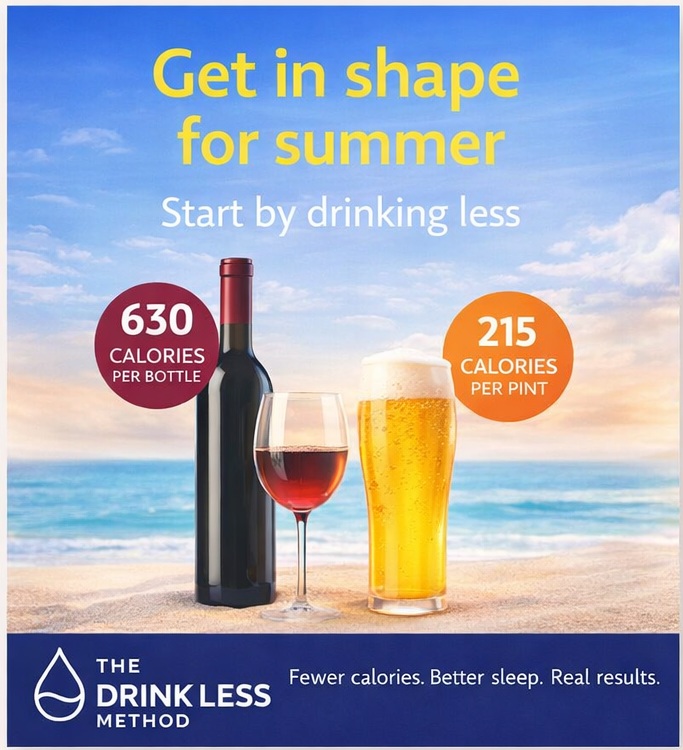
When people decide they want to get in shape for summer, the usual plan is simple: eat better and exercise more. But there’s a third factor that often has a far bigger impact than most realise — alcohol intake. Cutting back on alcohol can dramatically improve weight loss, energy levels and overall wellbeing, and for many people it becomes the single most effective change they make.
Why alcohol makes getting in shape harder
Alcohol is one of the most calorie‑dense substances in the diet, yet those calories provide no nutritional value. They’re easy to overlook because they don’t feel like “food”, but they add up quickly:
- A bottle of wine contains 600–700+ calories
- A pint of beer averages 200–250 calories
- Spirits mixed with sugary drinks can add 150–250 calories per glass
These calories are usually consumed on top of normal meals, which makes weight loss significantly harder. Even if you’re eating well and exercising, regular drinking can quietly cancel out your progress.
The hidden effects of alcohol on your body
The impact of alcohol goes far beyond calories. It also affects the systems that help you lose weight and feel energised:
- Sleep disruption: Alcohol reduces sleep quality, which affects recovery, metabolism and appetite control.
- Increased cravings: Drinking lowers inhibitions and increases hunger, making high‑calorie foods more tempting.
- Slower metabolism: Your body prioritises processing alcohol over burning fat.
- Bloating and inflammation: Alcohol can cause water retention and digestive irritation, making you feel heavier and less lean.
These effects combine to make fat loss slower, workouts feel harder and motivation drop.
A clinically supported way to reduce alcohol intake
Cutting back on alcohol isn’t just about willpower. Drinking habits are influenced by routine, environment and brain chemistry, which is why many people find it difficult to reduce their intake even when they want to.
One option that has been clinically studied is naltrexone, a medication used in structured treatment plans for reducing alcohol consumption. In general terms, research shows that naltrexone can:
- Reduce the rewarding effects people experience when drinking
- Lower cravings
- Support a gradual reduction in alcohol intake over time
In the UK, naltrexone is available through a private prescription, following a clinical assessment to ensure it is appropriate and safe for the individual. This approach allows people to reduce drinking in a controlled, supported way.
A smarter, more sustainable approach to getting in shape
Extreme diets and short‑term detoxes rarely lead to lasting results. Reducing alcohol intake, however, can create meaningful improvements in:
- Weight management
- Sleep quality
- Energy levels
- Mood and motivation
- Long‑term health
For many people, cutting back on alcohol becomes the catalyst that makes healthy eating and exercise feel easier and more enjoyable.
If you’re aiming to feel fitter, lighter and more energised this summer, reducing alcohol intake may be one of the most effective steps you can take.
Learn more: www.drinklessmethod.co.uk