What is Naltrexone and Where is it Available?
Naltrexone is a non-addictive medication that can help you cut back on drinking by making alcohol feel less rewarding. After a short period of time taking Naltrexone, many people notice they naturally crave alcohol less and find it easier to stop after just one or two drinks.
By gently blocking the “buzz” that drives you to keep drinking, naltrexone supports moderation without taking away your choice. Over time, it can help you feel more in control of your drinking habits.
How Naltrexone Changes the Brain’s Reward Pathway
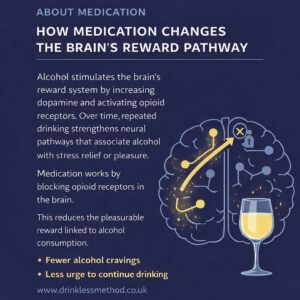
When you drink alcohol, your brain releases endorphins. These chemicals activate opioid receptors and increase dopamine levels in the brain’s reward system. This creates the pleasurable feeling associated with drinking. Over time, repeated alcohol use strengthens this neurological pathway, reinforcing the link between alcohol and reward.
This is why cutting down drinking can feel difficult — even when motivation is strong. The brain has learned to expect pleasure.
Naltrexone works by blocking opioid receptors, particularly the mu-opioid receptor involved in alcohol’s rewarding effects. When these receptors are blocked, alcohol produces less reinforcement. You may still feel relaxed, but the strong “reward response” is reduced.
With consistent use before drinking, this leads to a process known as pharmacological extinction. Gradually, the brain weakens its learned association between alcohol and pleasure.
How Long Does Naltrexone Take to Work?
By blocking this response, naltrexone reduces the reinforcement associated with alcohol.
However, this neurological change is gradual rather than immediate.
Because drinking habits are learned behaviours built over time, the brain requires repeated experiences of reduced reward before the association weakens. This process is known as pharmacological extinction.
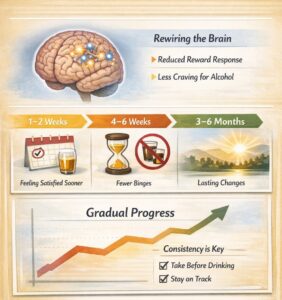
Some individuals notice early changes within the first 1–2 weeks, such as:
- Feeling satisfied sooner
- Less urge for another drink
- Reduced binge episodes
For others, changes become clearer over:
- 4–6 weeks
- Continued improvement over 3–6 months
Consistency is key. Naltrexone should be taken as prescribed — typically prior to drinking — to allow the reward pathway to weaken progressively.
Importantly, it is not designed as an instant “switch off.” Instead, it works cumulatively, supporting long-term alcohol reduction rather than short-term suppression.
Why Lower Dose Naltrexone Is Used to Start Treatment
When beginning naltrexone for alcohol reduction, treatment often starts at a lower introductory dose before moving to the standard therapeutic dose.
This approach — known as dose titration — is widely used in medicine to help the body adjust gradually to a new medication.
Naltrexone works by blocking opioid receptors in the brain, reducing the rewarding effect of alcohol. While this mechanism is well tolerated by most people, introducing it slowly can help minimise early side effects.
Starting with low-dose naltrexone allows:
- The body to adapt more comfortably
- Reduced likelihood of nausea
- Lower risk of sleep disturbance
- Greater treatment adherence
- Increased patient confidence
After an introductory period, the dose is increased to 25mg, and then for full benefit up to 50mg if clinically appropriate.
This gradual step-up process ensures the neurological effects of naltrexone can begin without overwhelming the system.
Is Naltrexone Safe? Side Effects Explained
Naltrexone has been used in clinical practice for over 30 years and is widely regarded as a safe and well-tolerated medication when prescribed appropriately. Originally developed in the United States and later licensed across multiple countries, it has been studied extensively in alcohol reduction and alcohol dependence treatment.
Because naltrexone is a prescription medication in the UK, clinician assessment is always required before use. This ensures it is suitable based on medical history, liver function, and any concurrent medications.
So, what about side effects?
Most people tolerate naltrexone well, particularly when starting at a lower introductory dose. Where side effects do occur, they are usually mild and temporary as the body adjusts.
Common side effects may include:
- Mild nausea
- Headache
- Fatigue or tiredness
- Sleep disturbance or insomnia
- Gastrointestinal discomfort
Naltrexone FAQs
No, the method is intended to teach you and your body to crave the hit that alcohol gives you and therefore to increase your number of drink free days. You may choose to take a tablet prior to a social event where you feel you may overindulge or where the triggers to drink are particularly strong.
Any side effects are usually minimal. Anyone suffering from any liver complaints may not join the Drink Less Method. For a full list of side effects, always read the Patient Information Leaflet.
The tools we use are generally safe to use and many people take it for months without serious problems.
In the short term, some people may feel a bit of nausea, headache, tiredness, or trouble sleeping when they first start, but these usually improve as the body adjusts. In the long term, research shows that our medication is safe for many people, provided your liver function stays healthy. As long as you have regular check-ups and take it as directed, it’s considered a well-tolerated medication. It’s not habit-forming, and it doesn’t cause withdrawal when you stop taking it, which makes it a good option for ongoing support if it’s working well for you.
Our method is suitable for casual to moderate drinkers who wish to reduce their alcohol intake but do not wish to quit alcohol all together. It is aimed at people who maybe drink too much or too regularly and are looking to cut back but still enjoy a drink.
Our consultation ensures that you are medically compatible with the typical medication employed. We also look at your current alcohol consumption and motivation behind drinking and your motivation to drink less.
For your second or repeat prescription from the Drink Less Method, you will be required to complete an additional consultation, covering changes to your health, medication and drinking habits, prior to issuing a repeat prescription.
Yes, it’s completely legal. The 50mg Naltrexone products are fully licensed in the UK for alcohol and opioid dependency.
None of the manufacturers currently have applied for (or obtained) a license for a lower dose, not that the medicine is unregulated or illegal.
Off label medicines are very common and legal in the UK and often called ‘specials’ and used by qualified clinicians to prescribe them when, in their judgment, it’s likely to help and is safe for you. They don’t require an NHS prescription, so you just pay the price listed on this website plus any postage fees. It does not mean the treatment is “unapproved” or shady.
No. Naltrexone is non-addictive and does not cause a “high.” It simply reduces the rewarding effect of alcohol so you’re more in control of your choices.
Naltrexone blocks the brain’s opioid receptors, which are part of what makes alcohol feel rewarding. With less of that “buzz,” you may find yourself naturally drinking less without having to rely on sheer willpower.
Naltrexone in 50mg capsules is proven in multiple randomised clinical trials to show oral naltrexone helps people with Alcohol Use Disorder to reduce heavy drinking and addiction when combined with psychological support.
Evidence about the use of naltrexone and for different ways of using it in the treatment of alcoholism
“Eight double-blind placebo-controlled clinical trials in five countries have demonstrated the safety and efficacy of naltrexone as an adjunct in alcoholism treatment. The efficacy depends, however, on how naltrexone is used. Three of the trials tested naltrexone in two ways: (1) with supportive therapy, i.e. support of complete abstinence; (2) with therapy tacitly accepting that relapses may occur and teaching how to cope with them.” Source John David Sinclair
Conclusions: Both naltrexone and nalmefene have proved to be safe, well tolerated, easy to manage, and efficient drugs for the treatment of alcohol dependence disorder (currently known as alcohol use disorder). On the basis of recent controlled clinical trials, nalmefene has been shown to result in a significant reduction of alcohol consumption, thereby representing a new objective that extends the therapeutic possibilities for those patients who do not wish for a continuous abstinence, but rather a reduction of alcohol consumption. Click for Source
Naltrexone is usually taken as a tablet on days when you are planning to have a drink – one hour before normal drinking time. Over time, this steady support can help reduce cravings and make drinking less of a focus in your day-to-day life.
To start the process there is absolutely no need to sign up to a subscription. Simply complete the consultation, which will enable you to purchase the starter pack. That is the end of your commitment, there are no reoccurring charges. Once your starter course is complete, we will invite you to carry out a second consultation which is totally optional. After the successful completion of this consultation, you will be able to arrange a single repeat prescription order with us.
Naltrexone can be ordered from this website after carrying out a thorough consultation. Your answers will be reviewed by the in-house clinician and, if there are no further questions from them, you will be issued with a private prescription to order your first series of Naltroxene. This order is for a two month supply – the first supply at a lower dose to be sure of no serious side effects.
Naltrexone may cause liver damage when taken in large doses. It is not likely that naltrexone will cause liver damage when taken in recommended doses. Tell your doctor if you have or have ever had hepatitis or liver disease. If you experience any of the following symptoms, stop taking naltrexone and call your doctor immediately: excessive tiredness, unusual bleeding or bruising, loss of appetite, pain in the upper right part of your stomach that lasts more than a few days, light-coloured bowel movements, dark urine, or yellowing of the skin or eyes.
Naltrexone may cause side effects
- nausea
- vomiting
- stomach pain or cramping
- diarrhea
- constipation
- loss of appetite
- headache
- dizziness
- anxiety
- nervousness
- irritability
- tearfulness
- difficulty falling or staying asleep
- increased or decreased energy
- drowsiness
- muscle or joint pain
- rash
Some people feel changes within the first week, while for others it may take a little longer. The benefits tend to build over time as drinking becomes less appealing. Real results appear for most subjects after four weeks of use.
No. Unlike some treatments that require total abstinence, our medication is designed to support moderation. You can still enjoy a drink if you’d like—many people just find it easier to stop after one or two.
Further Reading
Naltrexone Wikipedia Entry Evidence about the use of naltrexone and for different ways of using it in the treatment of alcoholism The status of naltrexone in the treatment of alcohol dependence: specific effects on heavy drinking. Naltrexone: a controversial therapy for alcohol dependence.Articles on Naltrexone
- Private Prescription Options for Reducing Drinking in the UK
 When people begin to feel that their drinking habits are increasing, their first thought is often to speak with their GP. While… Read more: Private Prescription Options for Reducing Drinking in the UK
 - Reduce Drinking: Understanding Your OptionsMany people reach a point where they begin to question their drinking habits. It may not feel like a serious problem, but… Read more: Reduce Drinking: Understanding Your Options
- How Long Does Medication Take to Work?
 One of the most common questions people ask when starting treatment is: How long does medication take to work? The answer varies… Read more: How Long Does Medication Take to Work?
 - Why Lower Dose Medication Is Used to Start Treatment
 When beginning naltrexone for alcohol reduction, treatment often starts at a lower introductory dose before moving to the standard therapeutic dose. This… Read more: Why Lower Dose Medication Is Used to Start Treatment
 - How Medication can Change the Brain’s Reward PathwayTo understand how naltrexone helps with alcohol reduction, it’s important to understand how alcohol affects the brain. When you drink alcohol, your… Read more: How Medication can Change the Brain’s Reward Pathway