
The Goal Isn’t Perfection — It’s Consistency
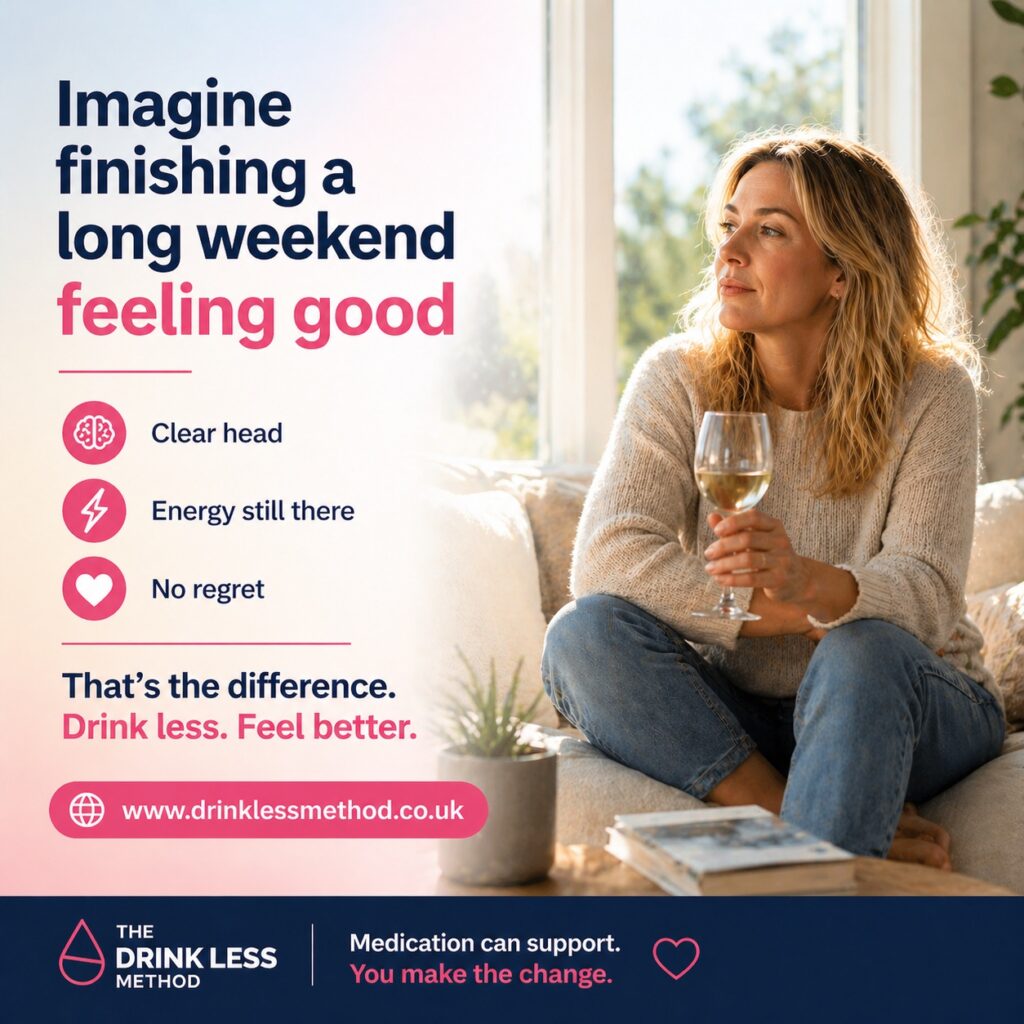
Imagine finishing a long weekend feeling:
- Clear‑headed
- Energised
- Ready for the week ahead
It’s absolutely possible — and it doesn’t require extreme rules, rigid restrictions, or giving up the things you enjoy. What makes the biggest difference isn’t perfection. It’s consistency.
Small, sustainable changes in how you drink can transform how you feel by Monday morning.
Small Changes, Big Impact
Alcohol has a bigger influence on your weekend than most people realise. Even modest reductions can lead to noticeable improvements in:
- Sleep quality — especially deep, restorative sleep
- Stable energy — fewer dips, fewer sluggish mornings
- Metabolism — better appetite regulation and fewer cravings
These changes ripple outward, affecting:
Weight — through improved metabolic balance
Mood — with fewer emotional highs and lows
Productivity — because you start the week feeling switched on, not behind
You don’t need to overhaul your lifestyle to feel these benefits. You just need to shift the pattern.
Why People Struggle
Most people don’t struggle because they lack knowledge.
They struggle because they lack consistency.
You already know that drinking less leads to better sleep, better energy, and better weekends. The challenge is doing it reliably — especially when habits, social cues, and the “just one more” effect kick in.
Alcohol affects decision‑making in the moment. It lowers inhibition and increases impulsivity, which makes sticking to your plan harder than it sounds. That’s why many people find themselves drinking more than intended, even with the best intentions.
This isn’t a moral failing.
It’s a biological one.
And it’s exactly why support can make such a difference.
Support That Works
For some people, behavioural strategies alone are enough. For others, especially those who repeatedly drink more than planned, structured support helps them build new habits more consistently.
Alongside lifestyle changes, some individuals explore clinically supported approaches to help reduce their alcohol intake.
One of the most researched medicines used within structured alcohol‑reduction programmes is naltrexone. It is a prescription‑only medicine, and its suitability is determined by a healthcare professional following a clinical review.
Naltrexone has been widely studied and is used within evidence‑based treatment pathways. It can support reduced drinking patterns by influencing the reward response associated with alcohol — helping people stop earlier or drink less as part of a broader plan.
It’s not a sedative, and it doesn’t make you feel unwell if you drink. Instead, it works on the neurological side of habit, which is why some people find it helpful within a structured programme.
A Medical Approach That Fits Real Life
At drinklessmethod.co.uk, individuals can access support through a structured, clinically guided approach. This includes:
- A clinical review to understand personal needs and medical history
- Access to private prescription treatment, where appropriate
- A personalised plan designed to support gradual, sustainable change
The focus is always on safe, tailored care — not one‑size‑fits‑all solutions.
The Outcome
You don’t need to stop everything.
You don’t need to be perfect.
You don’t need to overhaul your life.
You just need to feel in control again.
And when that happens, everything shifts:
- You stop earlier
- You feel better the next day
- You enjoy your long weekend instead of recovering from it
- You start the week feeling ready, not behind
Consistency — not perfection — is what changes everything.