
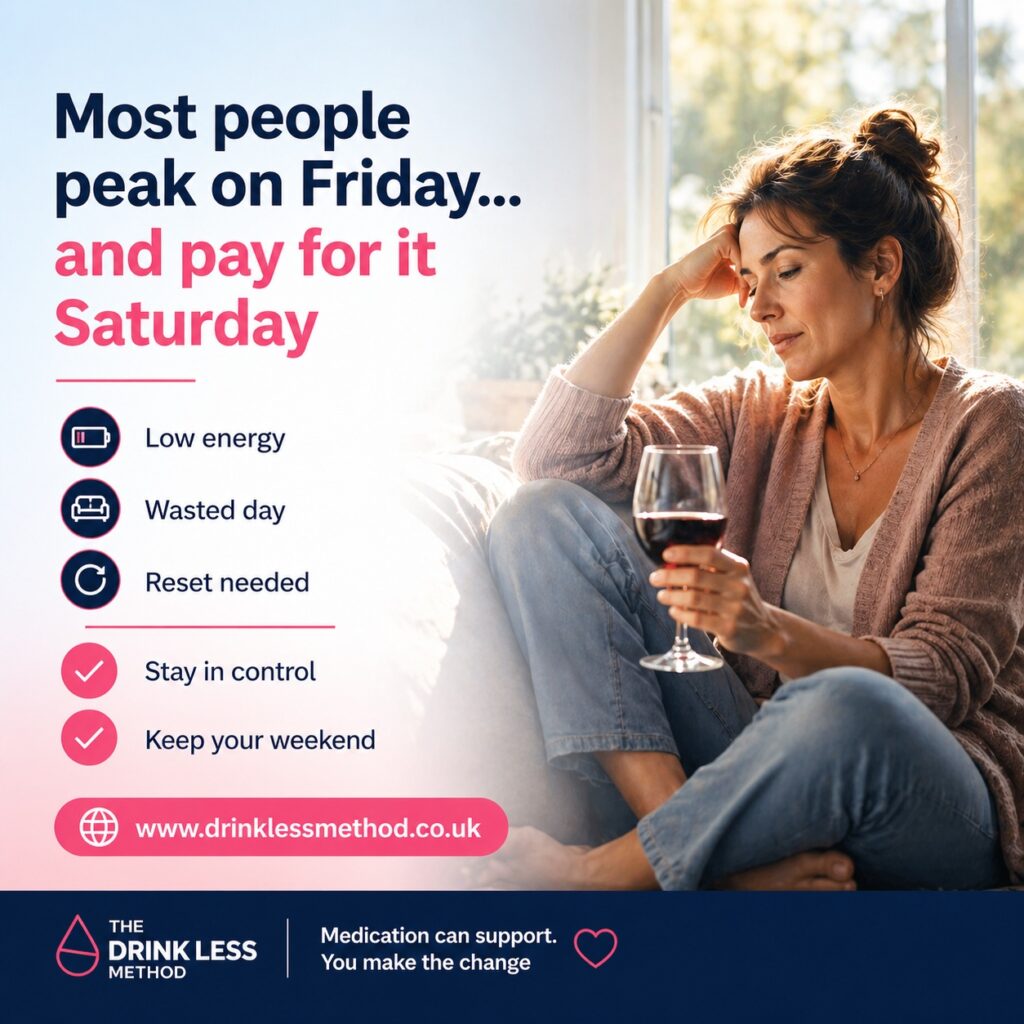
The Saturday Slowdown Explained
Most people know the feeling.
Friday night feels easy, fun, and harmless enough. You wake up on Saturday expecting to feel rested and ready for the weekend — but instead, something feels off. Your energy is low. Your motivation is missing. You’re not hungover, not really, but you’re definitely not at your best.
It’s a familiar pattern, and it’s more common than you might think.
It’s Not Just a Hangover
Even when you don’t drink heavily, alcohol can have effects that carry into the next day. These aren’t dramatic or obvious — they’re subtle, but they add up.
Alcohol can:
- Disrupt REM sleep, the stage linked to memory, mood, and mental clarity
- Affect hydration, leaving you feeling sluggish
- Increase inflammation, which can contribute to that “heavy” feeling
- Impact blood sugar levels, causing dips in energy and mood
The result is what many people describe as a “flat” or “dull” feeling the next morning. Not ill, not hungover — just not yourself.
The Weekend Cycle
For many people, weekends fall into a predictable rhythm:
- Friday: drinks
- Saturday: low energy
- Sunday: trying to recover
- Monday: back to routine, feeling behind
Over time, this becomes normal. You start to expect Saturdays to feel slow, Sundays to feel like catch‑up, and Mondays to feel like a reset you didn’t quite earn.
But it doesn’t have to be that way.
Breaking the Pattern
One of the quickest ways to change how your weekends feel is to change how much — or how often — you drink.
Even small reductions can lead to noticeable improvements:
- Better sleep quality, especially deeper, more restorative sleep
- More productive mornings, where you actually feel awake
- Improved consistency, so your weekend doesn’t feel like a rollercoaster
These changes often show up faster than people expect. Sometimes within a week or two.
When Moderation Feels Difficult
For some people, cutting back is straightforward. For others, it’s harder — not because of willpower, but because alcohol has a strong behavioural and neurological pull.
That’s where structured support can make a difference.
Alongside behavioural strategies, some individuals explore clinically supported options to help reduce their alcohol intake.
Clinical Support Options
One of the most researched medicines used within structured alcohol‑reduction programmes is naltrexone. It is a prescription‑only medicine, and its use is determined by a healthcare professional following a clinical assessment.
Naltrexone works by:
- Blocking certain opioid receptors
- Reducing the “reward” response associated with drinking
- Helping people stop earlier or drink less
It is not a sedative, and it does not make you feel unwell if you drink. Instead, it changes how alcohol feels, which can support people who want to reduce their intake as part of a broader plan.
Accessing Support
At drinklessmethod.co.uk, individuals can access a structured programme designed to support alcohol reduction. This includes:
- A clinical assessment to understand individual needs
- Access to private prescription medication, where appropriate
- Ongoing support to help build new habits and maintain progress
The focus is always on safe, personalised care — not one‑size‑fits‑all solutions.
Why This Matters
When drinking changes, weekends change.
You don’t just avoid feeling worse.
You start feeling better — consistently.
Saturday becomes a day you can actually use.
Sunday becomes a day you enjoy, not a day you recover from.
And Monday stops feeling like a punishment.
Small changes in alcohol habits can create big changes in how your life feels — especially on the days that matter most.