
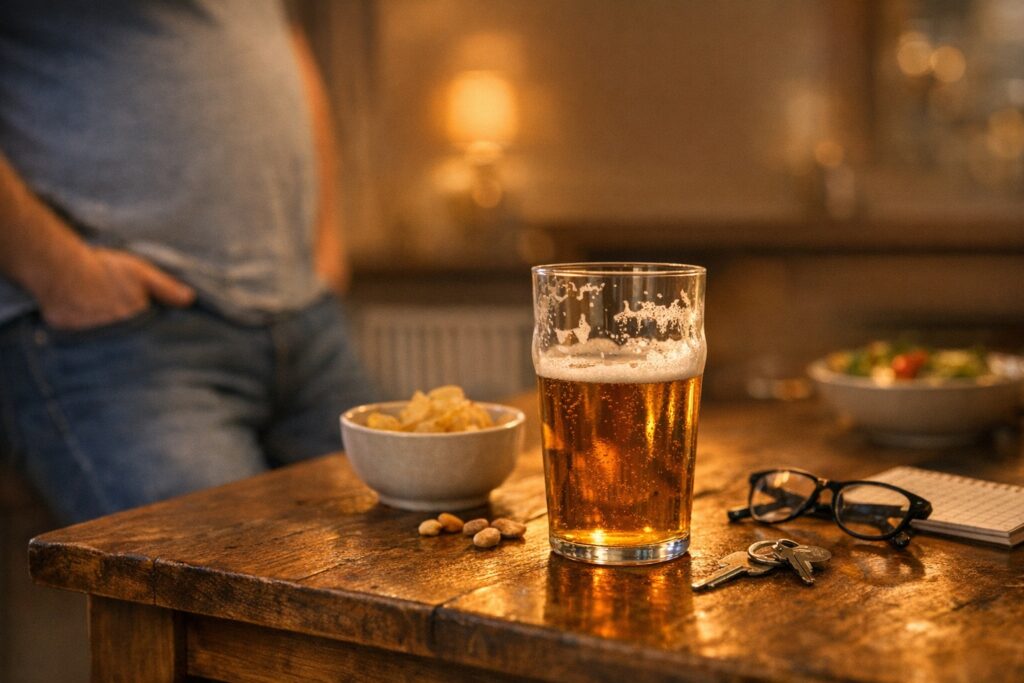
Beer is one of Britain’s favourite drinks — a social staple at pubs, barbecues and football matches. Yet, it’s also one of the most common contributors to unwanted weight gain. While many people focus on food calories, beer quietly adds hundreds of extra calories each week and can disrupt metabolism, digestion and sleep, making it harder to stay healthy or lose weight.
Calories in beer: small numbers that add up fast
A typical pint of beer contains 200–250 calories, roughly the same as a chocolate bar. Two pints a night, five nights a week, can add up to more than 2,000 calories — almost a full day’s worth of food. According to Drinkaware, alcohol provides 7 kcal per gram, nearly as energy‑dense as fat. Those calories are “additive,” meaning they sit on top of your normal diet rather than replacing food. Over time, that surplus energy promotes fat storage and gradual weight gain.
Beer also contains carbohydrates and sugars that spike insulin levels, encouraging the body to store fat, particularly around the abdomen. This is why regular beer drinkers often notice increased belly fat, sometimes referred to as “beer belly.” Belly fat is not just cosmetic — it’s metabolically active and linked to higher risks of heart disease, diabetes and liver problems.
The impact on body composition and metabolism
Beyond calories, alcohol affects how your body burns fat. When you drink, your liver prioritises breaking down alcohol over metabolising fat or carbohydrates. This means fat‑burning slows dramatically until the alcohol is cleared. Over time, this can lead to slower fat loss, reduced muscle recovery and lower energy levels.
Alcohol also interferes with sleep quality. Even though it may make you feel drowsy, it disrupts deep sleep and REM cycles — the stages responsible for hormone balance and recovery. Poor sleep increases hunger hormones like ghrelin, reduces metabolism and makes it harder to resist cravings, creating a vicious cycle of fatigue and overeating.
Why cutting back can be difficult
Beer is deeply tied to social habits and routines — from after‑work drinks to weekend gatherings. These associations make it hard to reduce intake using willpower alone. Many people find that even when they intend to drink less, cravings or social pressure lead to overconsumption.
Clinically supported help for change
If cutting back feels challenging, the Drin Less medication can help. It reduces the rewarding effects of alcohol in the brain, making it easier to drink less and regain control. It’s not about abstinence — it’s about moderation and balance.
In the UK, naltrexone is available through private prescription, following a clinical assessment to ensure safe and appropriate use. This provides a confidential, medically supported route for those who want to reduce drinking without judgment or long waiting times.
Transforming your health
Reducing beer consumption can lead to noticeable improvements within weeks:
- Weight loss and reduced belly fat
- Better sleep and energy
- Improved digestion and mood
- Lower risk of heart and liver disease
Small changes — like swapping a few pints for alcohol‑free alternatives or setting drink‑free days — can make a big difference. Cutting back isn’t about restriction; it’s about reclaiming your health, confidence and vitality.
Take the first step:
www.drinklessmethod.co.uk