
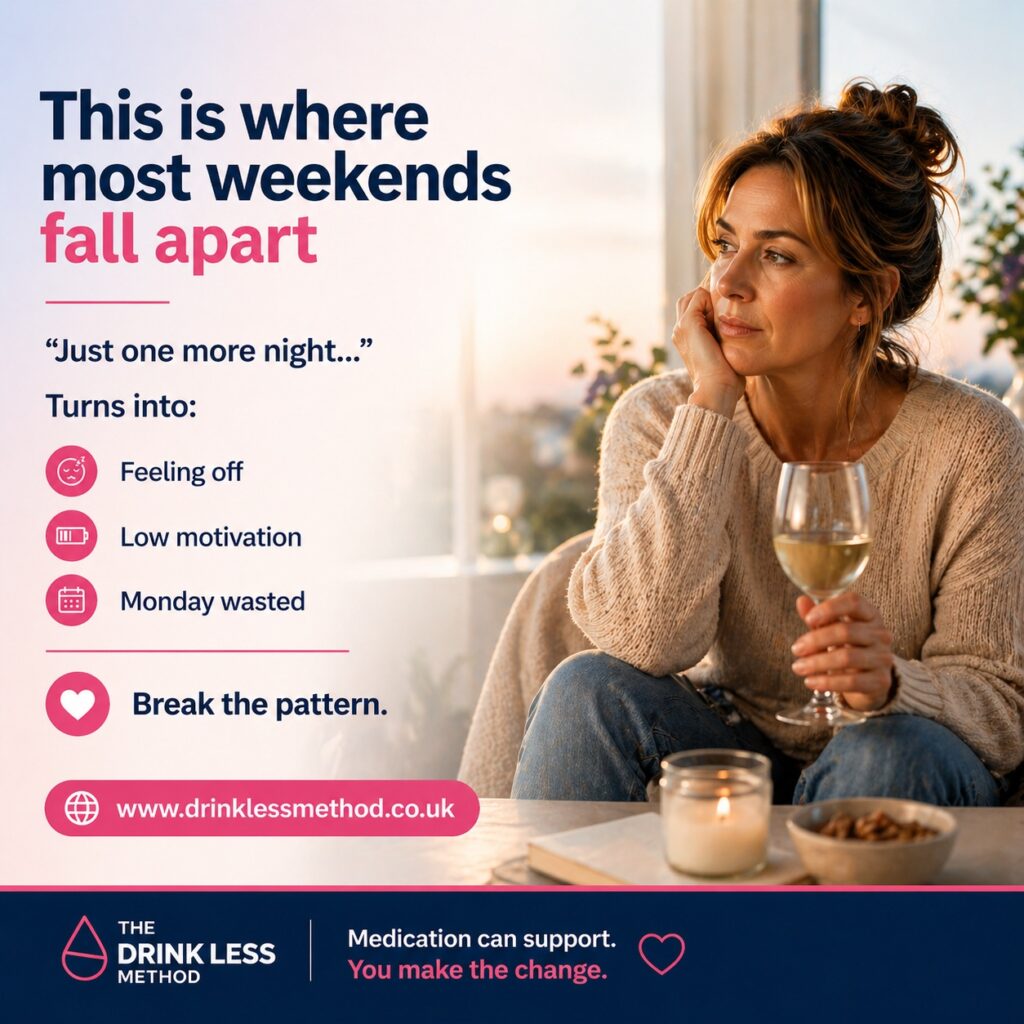
The “Just One More” Effect
Most people don’t set out to overdrink.
It happens gradually, almost invisibly.
You start the evening with a plan — maybe two drinks, maybe three. But as the night goes on, “just one more” becomes two… then three… and before you realise it, the weekend has shifted.
It’s a familiar pattern, and it’s not about lack of discipline. It’s about how alcohol affects the brain in the moment.
The Psychology Behind It
Alcohol changes decision‑making long before you feel drunk.
It reduces inhibition, increases impulsivity, and makes short‑term rewards feel more appealing than long‑term intentions. That’s why stopping can feel difficult — even when you fully intended to.
This isn’t a character flaw.
It’s a biological response.
When alcohol lowers your internal “brakes,” the part of your brain responsible for self‑control becomes quieter, while the part that seeks reward becomes louder. The result? You drink more than planned, even when you didn’t mean to.
The Pattern Many People Recognise
For a lot of people, weekends follow a predictable cycle:
- You drink more than planned
- You feel off the next day
- You repeat the cycle
Over time, this becomes normal. You expect Saturday to feel slow, Sunday to feel like recovery, and Monday to feel like a reset you didn’t quite earn.
But the pattern isn’t inevitable — and it’s not a reflection of willpower. It’s simply the way alcohol interacts with habit, reward, and decision‑making.
Changing the Response
Reducing alcohol isn’t about perfection. It’s about:
- Awareness — noticing your patterns
- Control — feeling able to stop earlier
Consistency — building weekends that feel better, not worse
For some people, small behavioural changes are enough. For others, especially those who find themselves repeatedly drinking more than intended, additional support can make a meaningful difference.
Where Clinical Support Fits In
Alongside lifestyle changes, some individuals explore clinically supported approaches to help reduce their alcohol intake.
One of the most researched medicines used within structured alcohol‑reduction programmes is naltrexone. It is a prescription‑only medicine, and its suitability is determined by a healthcare professional following a clinical assessment.
Naltrexone works differently from approaches that rely solely on willpower. It can:
- Reduce the reward response associated with alcohol
- Weaken the learned habit over time
- Support gradual, sustainable change
It doesn’t sedate you, and it doesn’t make you feel unwell if you drink. Instead, it changes how alcohol feels, which can help people stop earlier or drink less as part of a broader plan.
Accessing Support
Through The Drink Less Method, individuals can explore structured support for reducing alcohol. This includes:
- A clinical assessment to understand personal needs
- Access to private prescription medication, where appropriate
- Ongoing support to help build new habits and maintain progress
The goal is not to force change, but to support it — safely, responsibly, and in a way that fits real life.
A Better Weekend
When the cycle breaks, weekends change dramatically.
- You stop earlier
- You feel better the next day
- You regain a sense of control
- You start enjoying your time off again
Weekends stop “falling apart” — and start feeling like the break they’re meant to be.
Small changes in drinking habits can create big changes in how your life feels. And when you shift the pattern, you don’t just avoid the lows… you make space for better, more consistent highs.