
Why Medication Could Change the Way We Think About Alcohol
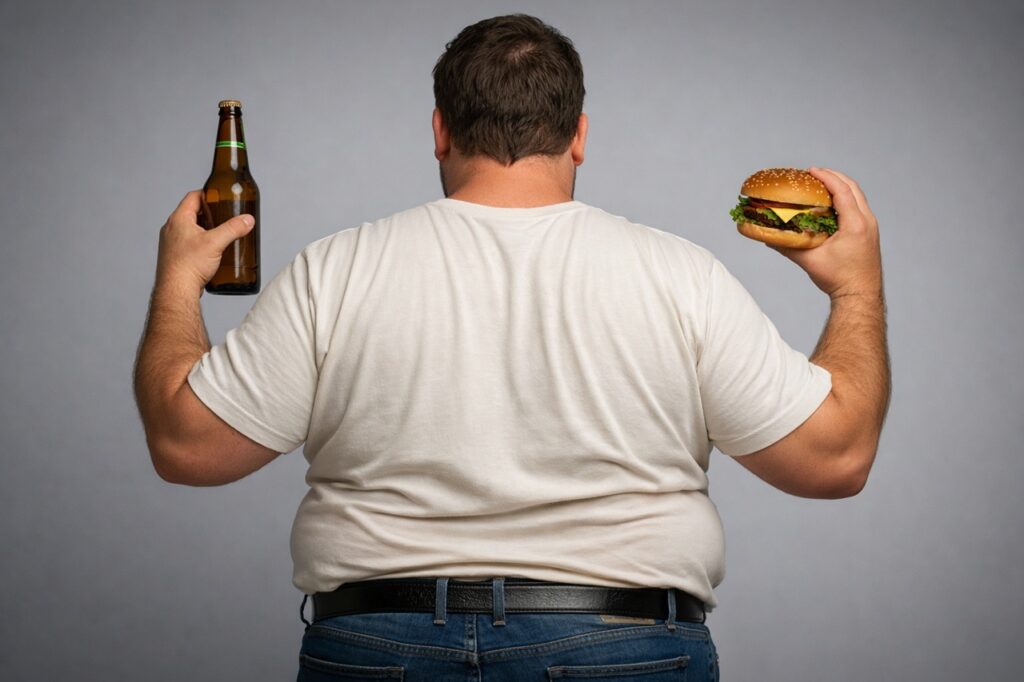
Over the past few years, the way people think about weight loss has changed dramatically.
For decades, the standard advice was familiar: eat less, exercise more and have more willpower.
Then medications such as weight-loss injections entered mainstream conversation. Suddenly, millions of people began discussing appetite, cravings and the biological mechanisms that can make weight management difficult.
The conversation shifted.
Instead of assuming that someone who struggles with their weight simply lacks discipline, there is now much greater recognition that appetite, reward, habits and biology all play a part.
Could something similar happen with alcohol?
People searching online increasingly ask questions such as:
“Is there a pill to stop drinking?”
“Is there a medication that makes you want alcohol less?”
“Can I take something to help me drink less?”
And perhaps the most interesting comparison is this:
Could Naltrexone become for drinking what the so-called “skinny jab” has become for weight loss?
The comparison isn’t medically exact. Naltrexone and weight-loss injections are completely different medicines that work in different ways and are used for different conditions.
But the idea behind the comparison is worth exploring.
From “Eat Less” to the Weight-Loss Jab
The extraordinary popularity of the so-called fat jab, weight-loss jab or skinny jab tells us something important about human behaviour.
Most people who want to lose weight already know that consuming fewer calories can help.
Knowledge isn’t necessarily the problem.
The difficulty can be appetite, cravings, reward, habit and maintaining changes over months and years.
Medication hasn’t abolished the importance of diet and lifestyle. What it has done is introduce another tool.
And this raises an interesting question about alcohol.
Most people who feel they’re drinking too much already know the solution in purely mathematical terms:
Drink less alcohol.
But knowing that and consistently doing it can be very different things.
“Why Can’t I Just Drink Less?”
Imagine someone drinking a bottle of wine most evenings.
They decide they’ll only have one glass tonight.
Six o’clock arrives.
They pour the first glass.
Then comes another.
And before long, their original plan has disappeared.
The following morning they may be frustrated with themselves and promise that tonight will be different.
This cycle can repeat again and again.
That’s why telling someone who is struggling with their alcohol consumption to “just drink less” can be about as useful as telling someone struggling with their weight to “just eat less.”
Behaviour is more complicated than that.
Alcohol consumption can involve routines, environmental cues, learned behaviour, cravings and the brain’s reward systems.
And that’s where medication to reduce drinking becomes particularly interesting.
Is There a “Skinny Pill” for Alcohol?
Not literally.
There is no alcohol equivalent of a weight-loss injection, and Naltrexone should not be described as an alcohol version of a GLP-1 medicine.
But there are prescription medications used in the treatment of alcohol problems.
One of the best established is Naltrexone.
Naltrexone isn’t a new wonder drug invented because alcohol reduction has suddenly become fashionable.
It has been studied for decades.
It is an opioid-receptor antagonist, which means it blocks opioid receptors involved in reward pathways.
That gives us a fascinating parallel with the broader change taking place in weight management.
Instead of relying entirely upon:
“I must have more willpower.”
Medication may potentially form part of a treatment strategy.
How Does Naltrexone Help With Drinking?
Naltrexone doesn’t physically stop someone drinking.
It doesn’t remove alcohol from your bloodstream.
It doesn’t prevent intoxication.
And it isn’t like disulfiram, sometimes known as Antabuse, which can produce a highly unpleasant reaction when alcohol is consumed.
Naltrexone works differently.
Alcohol can activate reward-related pathways in the brain, and the endogenous opioid system is involved in some of those reinforcing effects.
Naltrexone blocks opioid receptors.
The theory is therefore that reducing some of alcohol’s reinforcing effects may help reduce drinking or the likelihood of returning to heavy drinking in suitable patients.
That doesn’t mean someone takes one tablet and instantly loses all interest in alcohol.
Just as sustainable weight management isn’t necessarily transformed overnight, changing an established relationship with alcohol can take time.
The Fascinating Connection With the Sinclair Method
This becomes even more interesting when we look at the work of Dr John David Sinclair.
Sinclair’s research into alcohol and learned behaviour began in the 1970s and ultimately led to the approach widely known as the Sinclair Method.
One of the ideas behind Sinclair’s work was that alcohol-seeking behaviour can be learned and reinforced.
If alcohol repeatedly produces a reinforcing response, the desire to repeat that behaviour can become stronger.
Sinclair investigated whether blocking opioid receptors when alcohol was consumed could gradually weaken that learned reinforcement.
This became associated with the concept of pharmacological extinction.
Rather than simply saying:
“Don’t drink.”
the theory attempted to change part of the reinforcement maintaining the behaviour.
That’s a very different way of thinking about alcohol reduction.
Targeted Naltrexone: Medication Connected to Drinking
The Sinclair Method is particularly associated with targeted Naltrexone.
In targeted treatment, Naltrexone is prescribed in relation to anticipated drinking occasions rather than necessarily being taken every day.
This is distinct from standard daily naltrexone treatment. Sinclair-style targeted use is an off-label approach rather than a named NICE treatment protocol, so whether it is clinically appropriate is a matter for an appropriately qualified prescriber.
But the underlying concept explains why some people find the approach so interesting.
Instead of medication simply sitting in the background, it is connected with the behaviour being addressed.
Could Alcohol Treatment Follow the Weight-Loss Revolution?
Perhaps the biggest similarity between weight-loss medication and alcohol-reduction medication isn’t pharmacological at all.
It’s psychological and cultural.
Consider how attitudes towards obesity have changed.
A person can now quite openly say:
“I’m taking medication to help me lose weight.”
Increasingly, people understand that medication can be one component of weight management.
But imagine saying:
“I’m taking medication to help me drink less.”
For many people, that still feels very different.
Alcohol problems continue to carry substantial stigma.
And that’s unfortunate because there is a huge spectrum between occasionally drinking and experiencing severe alcohol dependence.
There are people who hold down demanding jobs, look after families and live otherwise conventional lives while privately thinking:
“I’m drinking more than I want to.”
They might not identify with the term “alcoholic.”
They might not want rehabilitation.
They might not want to attend meetings.
And they might not currently want to stop drinking completely.
They simply want to drink less.
A Pill to Stop Drinking – Or a Tool to Help You Regain Control?
“Pill to stop drinking” is an understandable Google search.
So are:
“alcohol craving tablets”
“medicine to stop drinking alcohol”
“medication to reduce alcohol consumption”
“Naltrexone for alcohol cravings”
and
“how to stop drinking every night.”
But the phrase “pill to stop drinking” oversimplifies what medication can do.
There isn’t a tablet that can make all the decisions for you.
A better way to think about Naltrexone is potentially as one tool within a broader alcohol-reduction strategy.
That may include monitoring how much you drink, recognising triggers, introducing alcohol-free days, changing routines and setting realistic goals.
For an appropriate patient, medication can potentially be another component.
Drinking Every Night Doesn’t Necessarily Mean You Want Abstinence
This is another area where the comparison with weight loss is useful.
Imagine telling someone wanting to lose weight:
“The only solution is never eating your favourite food again.”
Many people would struggle with that proposition.
Yet people concerned about alcohol often assume the only treatment they’ll be offered is complete lifelong abstinence.
For some people, abstinence absolutely is the safest and most appropriate goal.
But not everybody seeking help is in the same situation.
One person might want to go from drinking seven nights a week to three.
Someone else might want to stop opening the second bottle.
Another may want to eliminate heavy drinking occasions.
And someone else may decide that stopping completely is ultimately their preferred objective.
The appropriate treatment depends upon the individual.
Medication Could Help Change the Conversation About Alcohol
Weight-loss drugs have arguably done something beyond helping individual patients.
They’ve changed the conversation.
People are talking about appetite differently.
They’re talking about food cravings differently.
They’re talking about obesity differently.
Perhaps alcohol treatment needs a similar shift.
Instead of the conversation immediately becoming:
“Are you an alcoholic?”
perhaps a better first question is:
“Are you drinking more than you want to?”
That’s a much easier question for millions of people to answer.
And if the answer is yes, the next conversation can be about the different ways of changing it.
Naltrexone Isn’t Suitable for Everyone
This is where the “skinny jab for drinking” analogy needs to stop.
Naltrexone is a prescription-only medicine, with important contraindications and precautions.
In particular, opioid use is extremely important because Naltrexone blocks opioid receptors. Medicines such as codeine, tramadol, morphine and methadone can therefore present significant problems.
Liver and kidney health and other aspects of a person’s medical history may also need consideration.
A proper clinical assessment is therefore essential.
Naltrexone also doesn’t protect someone against the effects of alcohol. Someone taking Naltrexone can still become intoxicated and suffer alcohol-related harm.
What About Alcohol Dependence and Withdrawal?
Medication to reduce drinking should never be confused with treatment for potentially dangerous alcohol withdrawal.
If you experience symptoms such as shaking, sweating or significant anxiety when you haven’t had alcohol, drink in the morning to steady yourself, or suspect you’re physically dependent on alcohol, don’t abruptly stop or substantially reduce your intake without seeking appropriate medical advice.
Alcohol withdrawal can be serious and, in some circumstances, cause seizures.
For someone with significant physical dependence, supervised withdrawal or specialist alcohol services may be more appropriate than an online alcohol-reduction programme.
The Drink Less Method: A Different Conversation About Alcohol
At the Drink Less Method, we think one of the most important changes is simply giving people permission to have a different conversation about their drinking.
It doesn’t necessarily have to begin with:
“I need to stop drinking forever.”
It can begin with:
“I’m drinking more than I want to and I’d like to do something about it.”
The Drink Less Method is inspired by the pioneering research of John David Sinclair and the ideas associated with the Sinclair Method, while providing its own clinically
guided approach for suitable adults who want to reduce their alcohol consumption.
Where prescription treatment is appropriate, that decision is made following clinical assessment by an independent qualified prescriber.
Will Naltrexone Become the Weight-Loss Jab of Alcohol Reduction?
Nobody should describe Naltrexone as an actual “skinny jab for drinking.”
They’re different medicines, treating different problems through different mechanisms.
But there is a compelling similarity in the broader idea.
Weight management has moved beyond simply telling people to eat less.
Perhaps alcohol treatment can move beyond simply telling everyone concerned about their drinking to try harder not to drink.
Medication doesn’t replace personal choice, behavioural change or appropriate medical care.
But for suitable people, medication such as Naltrexone may provide another option.
And perhaps that’s where the real revolution lies.
Not in finding a magical fat jab for alcohol or a miracle pill to stop drinking, but in recognising that people struggling to reduce their alcohol consumption deserve access to evidence-informed medical options as well as advice.
If you’re drinking every night, struggling with alcohol cravings, repeatedly drinking more than you intended, searching for medication to stop drinking alcohol, or simply wondering how to drink less, it may be worth exploring what options are available.
Because just as weight-loss treatment has changed enormously, our approach to drinking less alcohol doesn’t have to remain stuck in the past.
Find out more: www.drinklessmethod.co.uk
This article is for general information and does not replace individual medical advice. Naltrexone is a prescription-only medicine and is not suitable for everyone. Targeted Naltrexone differs from the licensed UK dosing regimen and requires appropriate clinical assessment. If you may be physically dependent on alcohol, seek medical advice before suddenly stopping or substantially reducing your alcohol intake.