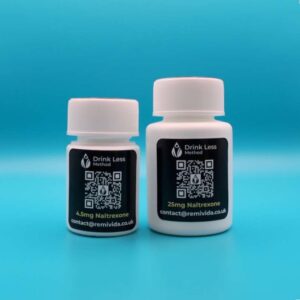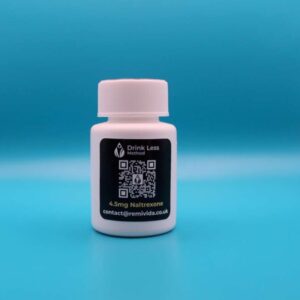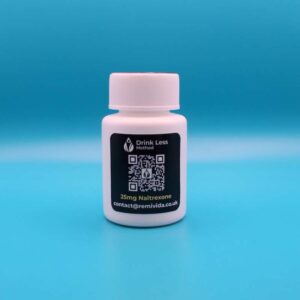
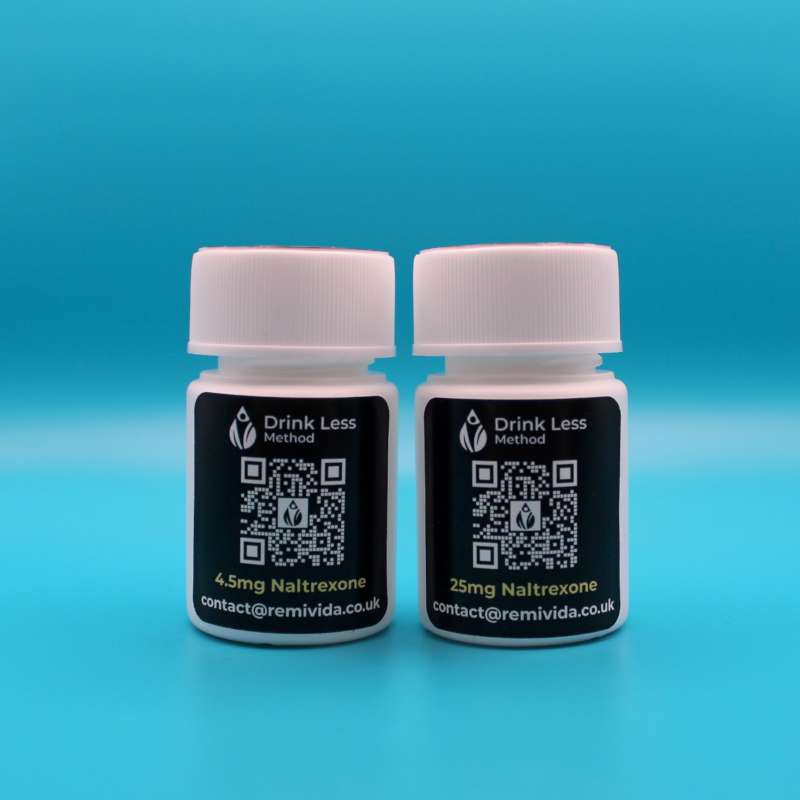
This product contains the following items:
- 30 × 4.5 mg naltrexone capsules
- 30 × 25 mg naltrexone capsules
- Full online health assessment
- Independent clinician review
- Private prescription where clinically appropriate
- Full Drink Less Method instructions
- Discreet UK delivery
- No subscription
- No automatic repeat orders
You will only be able to purchase this product after successful completion of the consultation
A different approach to drinking less
If you want to drink less alcohol without necessarily giving it up completely, the Drink Less Method offers an online assessment and clinician-led treatment pathway using naltrexone where medically appropriate.
Our Starter Packs use a gradual introductory approach, beginning with lower-strength naltrexone before moving to the dose and treatment schedule authorised by your prescriber.
Naltrexone and the Sinclair Method
You may have discovered naltrexone after searching for the Sinclair Method.
The Sinclair Method is associated with the pioneering work of Dr John David Sinclair, whose research into alcohol and learned behaviour began in the 1970s.
One principle associated with this approach is taking an opioid antagonist in anticipation of drinking, with the objective of reducing alcohol’s reinforcing effects over repeated drinking occasions.
The Drink Less Method is influenced by research into naltrexone, targeted treatment and the Sinclair Method, but it isn’t identical to the traditional Sinclair Method protocol.
Our approach includes an initial gradual introduction to naltrexone and an individual assessment by an independent prescribing clinician.
Read More: Does the Sinclair Method Work?
How does the Drink Less Method work?
Treatment is divided into two stages.
Stage 1 – Gradually introducing naltrexone
The standard ‘Starter Pack’ contains 30 × 4.5 mg naltrexone capsules.
The standard Drink Less Method introductory schedule is:
| Days | 4.5 mg capsules | Total dose |
| Days 1–2 | 1 | 4.5 mg |
| Days 3–4 | 2 | 9 mg |
| Days 5–6 | 3 | 13.5 mg |
| Days 7–8 | 4 | 18 mg |
| Days 9–10 | 5 | 22.5 mg |
During this introductory stage, the scheduled dose is taken each day, whether or not you intend to drink alcohol.
The lower-strength capsules allow naltrexone to be introduced gradually and give your body time to adjust.
This may help reduce the likelihood or severity of initial side effects such as nausea, headache, tiredness, dizziness or changes in sleep.
Always follow the instructions provided with your prescription. Your prescriber’s individual directions take precedence over the general schedule shown here.
If you experience troublesome side effects, don’t simply move to the next dose. Remain at your current stage and contact the clinical team before increasing further.
Stage 2 – 25 mg on planned drinking days
Once you have completed and tolerated the introductory stage, the standard Drink Less Method approach is to move to:
One 25 mg capsule at least one hour before you would normally start drinking, on days when you plan to drink.
At this stage, the medicine isn’t normally taken on alcohol-free days unless your prescriber has given you different instructions.
Some people may subsequently be prescribed a higher dose following clinical review.
Do not increase your dose yourself.
In particular, having 25 mg capsules available doesn’t mean that you should automatically take two capsules.
Any increase towards 50 mg should only take place where this has been authorised as part of your prescribed treatment.
Why does the Drink Less Method start at a lower dose?
Naltrexone can cause initial side effects in some people.
These may include:
- nausea;
- headache;
- tiredness or fatigue;
- dizziness;
- gastrointestinal symptoms; and
- changes in sleep.
The Drink Less Method provides 4.5 mg capsules so that naltrexone can be introduced progressively rather than beginning immediately at a higher dose.
The 4.5 mg capsules are therefore principally an introductory stage of the Drink Less Method, rather than necessarily being the dose used for ongoing alcohol-reduction treatment.
What should I expect from treatment?
Naltrexone shouldn’t be thought of as a tablet that instantly removes every desire to drink.
People respond differently.
Some people may initially notice relatively subtle changes.
You might find yourself drinking more slowly.
You may feel less interested in having another drink.
An evening that would previously have involved several drinks might finish earlier.
You may gradually begin having more alcohol-free days.
For others, changes take longer.
Keeping an accurate record can help you and the clinical team understand your response to treatment.
We recommend recording:
- the dose you take;
- the time you take it;
- how much alcohol you drink;
- the number of alcohol-free days you have; and
- any side effects.
The aim isn’t to achieve a particular result overnight.
It’s to establish whether treatment is helping you develop greater control over how much and how often you drink.
Continuing treatment – Repeat Naltrexone Packs
What happens when my Starter Pack is running low?
If you’re finding the Drink Less Method helpful and would like to continue treatment, you can request a repeat prescription.
You don’t need to buy another Starter Pack.
Instead, you’ll complete a short repeat assessment covering your progress, current drinking, treatment response, side effects and any changes to your health or medication.
An independent clinician reviews this information before deciding whether further treatment is appropriate and what dose should be prescribed.
If approved, you can choose from three repeat pack sizes.
1. Small Repeat Pack – 30 × 25 mg naltrexone capsules
A smaller ongoing supply that may suit people with fewer drinking days or whose prescribed treatment means 30 capsules will last them for a reasonable period.
2. Medium Repeat Pack – 60 × 25 mg naltrexone capsules
A larger ongoing supply providing greater flexibility for people who drink more frequently or whose clinician has authorised a treatment schedule requiring more capsules.
3. Large Repeat Pack – 100 × 25 mg naltrexone capsules
Our largest repeat option for customers continuing longer-term treatment where the quantity is appropriate for their prescribed dose and drinking pattern.
No subscription and no automatic repeat orders
We deliberately don’t operate the Drink Less Method as an automatic medication subscription.
Your initial Starter Pack is a one-off purchase.
When you’re ready for more medication, you decide whether you want to continue.
If you do, you complete a repeat assessment and a clinician reviews whether further treatment remains appropriate.
That means:
- No monthly subscription.
- No automatic prescription.
- No medication arriving that you haven’t requested.
- No obligation to continue.
Who may the Drink Less Method be suitable for?
Drink Less Method is intended for adults who want to reduce their alcohol consumption and regain greater control over their drinking, rather than necessarily stopping drinking completely.
Every application is assessed individually.
Completing the online assessment doesn’t guarantee that naltrexone will be prescribed.
An independent clinician considers your medical history, current medication, alcohol consumption and other relevant information before deciding whether treatment is appropriate.
Who may not be suitable for naltrexone?
Naltrexone isn’t suitable for everybody.
Your assessment is designed to identify important medical considerations, but there are several issues you should be particularly aware of.
Opioid medication
This is extremely important.
Naltrexone blocks opioid receptors and can interfere with opioid-containing medicines. It may also precipitate withdrawal in someone who is opioid-dependent.
You must tell the clinician about opioid medicines you currently take or have recently used.
These can include certain:
• strong painkillers;
• codeine-containing medicines;
• opioid substitution treatments; and
• other prescription or over-the-counter products containing opioids.
If you’re unsure whether something you take contains an opioid, tell the clinician or pharmacist before taking naltrexone.
Liver health
Naltrexone is processed by the liver.
Your medical history and liver health therefore need to be considered when deciding whether treatment is suitable.
Depending on your circumstances, the clinician may require blood test results or additional medical information before prescribing or continuing treatment.
Pregnancy and breastfeeding
Make sure you tell the clinician if you’re pregnant, trying to become pregnant or breastfeeding.
Treatment requires individual clinical consideration.
What if I’m physically dependent on alcohol?
Drink Less Method isn’t intended to replace medically supervised alcohol withdrawal.
If you experience symptoms such as shaking, sweating, significant anxiety, nausea or feeling that you need alcohol to steady yourself, don’t suddenly stop or substantially reduce heavy alcohol consumption without seeking appropriate medical advice.
Alcohol withdrawal can sometimes be dangerous.
Your GP, NHS 111 or an appropriate alcohol treatment service can advise you on the safest approach.
What are the possible side effects of naltrexone?
Like all medicines, naltrexone can cause side effects, although not everyone experiences them.
Reported effects can include:
• nausea;
• headache;
• tiredness or fatigue;
• dizziness;
• gastrointestinal symptoms; and
• sleep disturbance.
Your medicine will be supplied with information explaining possible side effects and what to do if they occur.
If you experience troublesome symptoms during the introductory stage, contact the clinical team before increasing your dose.
Seek urgent medical assistance for severe symptoms or signs of a serious allergic reaction.
Frequently Asked Questions About Naltrexone and Drink Less Method
Do I have to stop drinking to use the Drink Less Method?
The service is designed for people whose objective may be alcohol reduction rather than complete abstinence.
Your individual treatment must always follow the instructions given by your prescriber.
Do I take naltrexone every day?
During the introductory stage, the scheduled lower dose is normally taken daily.
After completing that stage, the standard Drink Less Method approach is to take your prescribed dose on planned drinking days, unless your clinician instructs you differently.
When do I take my 25 mg capsule?
The standard Drink Less Method instruction is at least one hour before you would normally start drinking, once you’ve completed and tolerated the introductory stage.
Always follow your individual prescription.
Can I take 50 mg?
Only if this has been authorised as part of your prescribed treatment.
Don’t increase from 25 mg to 50 mg yourself.
What’s the difference between the £169 and £199 Starter Packs?
Both contain 30 × 4.5 mg capsules for the introductory stage.
- The Standard Starter Pack then contains 30 × 25 mg capsules.
- The Enhanced Starter Pack contains 60 × 25 mg capsules, providing a larger supply and greater flexibility.
What happens when I run out?
If you want to continue treatment, complete the repeat assessment.
Subject to clinical approval, repeat packs containing 30, 60 or 100 × 25 mg capsules are available.
You don’t need to repeat the initial 4.5 mg titration simply because you’re ordering another pack unless your clinician specifically instructs you to do so.
Is there a subscription?
No.
There are no automatic repeat medication orders or recurring subscription charges.
Can I take naltrexone with codeine?
Codeine is an opioid and is an important interaction with naltrexone.
Tell your clinician about all opioid-containing medicines before treatment and seek clinical/pharmacy advice rather than attempting to manage the combination yourself.
Is naltrexone addictive?
Naltrexone isn’t an opioid and doesn’t produce an opioid-like high.
Will naltrexone stop me getting drunk?
No.
Naltrexone doesn’t prevent alcohol intoxication. You can still become impaired after drinking alcohol.
Do I need a prescription?
Yes.
Naltrexone is a prescription-only medicine in the UK. Treatment through Drink Less Method is only supplied following an appropriate assessment and prescribing decision.
What if 25 mg isn’t helping enough?
Don’t increase the dose yourself.
Your response, drinking pattern, adherence, side effects and dose can be reviewed. Your clinician can then determine whether any change to treatment is appropriate.