
For people searching for a pill to stop drinking or medication that could help them reduce their alcohol consumption, one treatment frequently appearing in searches is Naltrexone.
But there is more than one way in which Naltrexone may be prescribed.
One approach attracting particular interest is known as targeted Naltrexone.
Rather than taking Naltrexone every day regardless of whether alcohol will be consumed, targeted treatment involves taking the medication in connection with anticipated drinking occasions, according to the treatment plan provided by the prescriber.
This approach is closely associated with the pioneering work of Dr John David Sinclair and what subsequently became known as the Sinclair Method.
So, what is targeted Naltrexone? How is it different from daily Naltrexone? And could it potentially help someone who wants to drink less rather than necessarily stop drinking completely?
What Is Targeted Naltrexone?
Naltrexone is a prescription-only medicine and an opioid-receptor antagonist.
In conventional treatment for alcohol dependence, Naltrexone may be prescribed as a daily medication.
Targeted Naltrexone is different.
Instead of automatically taking the medicine every day, it is prescribed in relation to anticipated drinking occasions.
The source material describes the Sinclair-style approach as taking Naltrexone approximately one to two hours before drinking, with no dose on alcohol-free days.
That timing isn’t simply about convenience. It relates directly to the theory behind targeted treatment.
However, this is not a dosing instruction for individual readers. Targeted use differs from the standard licensed UK regimen, and the appropriate dose, timing and suitability need to be determined by a qualified prescriber.
How Does Naltrexone Work for Alcohol?
To understand targeted Naltrexone for alcohol, it helps to understand reinforcement.
Drinking alcohol can activate reward-related pathways in the brain. The endogenous opioid system is one component of that response.
Naltrexone blocks opioid receptors.
The theory behind targeted treatment is therefore not that Naltrexone physically prevents somebody from drinking.
It doesn’t.
Nor does it make alcohol poisonous or automatically make you feel ill when you drink.
Instead, the concept is that having Naltrexone active when alcohol is consumed may reduce some of alcohol’s reinforcing effects.
With repetition, Sinclair proposed that learned alcohol-seeking behaviour could gradually weaken.
This became known as pharmacological extinction.
That’s an important difference from thinking of Naltrexone as simply an alcohol craving tablet that instantly makes someone stop wanting a drink.
Targeted Naltrexone and the Sinclair Method
Search for Naltrexone before drinking and you’ll quickly encounter the Sinclair Method.
The approach takes its name from Dr John David Sinclair, whose research into alcohol and learned behaviour began in the 1970s.
Sinclair investigated whether alcohol-seeking behaviour could be reduced by combining drinking with opioid-receptor blockade.
The basic concept was remarkably different from the traditional abstinence-first model.
Rather than requiring the person to abstain before treatment and then using medication primarily to prevent relapse, targeted Naltrexone was associated with taking an opioid antagonist in connection with drinking.
The intention was to gradually weaken learned reinforcement.
This is why timing is so central to Sinclair-style targeted Naltrexone.
The source article explains that Naltrexone is absorbed relatively quickly and that the targeted approach attempts to have the medication active during the drinking occasion.
Targeted Naltrexone vs Daily Naltrexone
This distinction is extremely important.
They involve the same medicine, but they shouldn’t be treated as interchangeable protocols.
With daily Naltrexone, medication is taken every day according to the prescription, whether or not the person intends to consume alcohol.
With targeted Naltrexone, the medication is linked to anticipated drinking occasions.
The source material also makes an important UK regulatory distinction: daily Naltrexone is addressed in UK clinical guidance, whereas Sinclair-style targeted treatment is an off-label approach and isn’t itself a named treatment protocol in NICE guidance.
“Off-label” doesn’t mean that a medicine is automatically inappropriate.
It means that its use differs from the terms of its marketing authorisation. A qualified prescriber must therefore decide whether prescribing it in that manner is clinically appropriate for the individual patient.
Is Targeted Naltrexone a Pill to Stop Drinking?
Not in the way that phrase suggests.
People frequently search Google for:
“Is there a pill to stop drinking?”
“What medication makes you drink less?”
“Can Naltrexone stop alcohol cravings?”
“Can I take Naltrexone before drinking?”
There are medications used in the treatment of alcohol problems, including Naltrexone, but there isn’t a magic tablet that guarantees someone will immediately stop drinking.
Naltrexone also doesn’t prevent intoxication.
If you consume enough alcohol while taking Naltrexone, you can still become drunk. Your judgement and coordination can still be impaired, and excessive alcohol consumption remains harmful.
Naltrexone should therefore never be considered a way of making heavy drinking safe. The source material explicitly distinguishes blocking alcohol’s reinforcement from preventing alcohol-related impairment.
Why Are People Interested in Targeted Naltrexone?
A major attraction is the treatment objective.
Some people seeking help with alcohol don’t initially want complete abstinence.
They want to reduce drinking.
Perhaps you’re drinking wine every night and want more alcohol-free evenings.
Perhaps two drinks regularly become five.
Maybe you’ve repeatedly promised yourself that you’ll only drink at weekends but find yourself opening a bottle on Wednesday evening.
Or perhaps alcohol cravings make it difficult to stop once you’ve started.
For people in that position, searches for medication to reduce alcohol consumption can eventually lead to targeted Naltrexone and the Sinclair Method.
The objective is potentially different from:
“I must never drink alcohol again.”
It may begin with:
“I want to regain control over how much I drink.”
Does Targeted Naltrexone Work Immediately?
Targeted Naltrexone shouldn’t be thought of as an overnight cure.
The underlying concept of pharmacological extinction involves changing learned reinforcement through repetition.
The source material describes the treatment in terms of months rather than weeks, while also stressing that individual responses vary.
That makes tracking particularly useful.
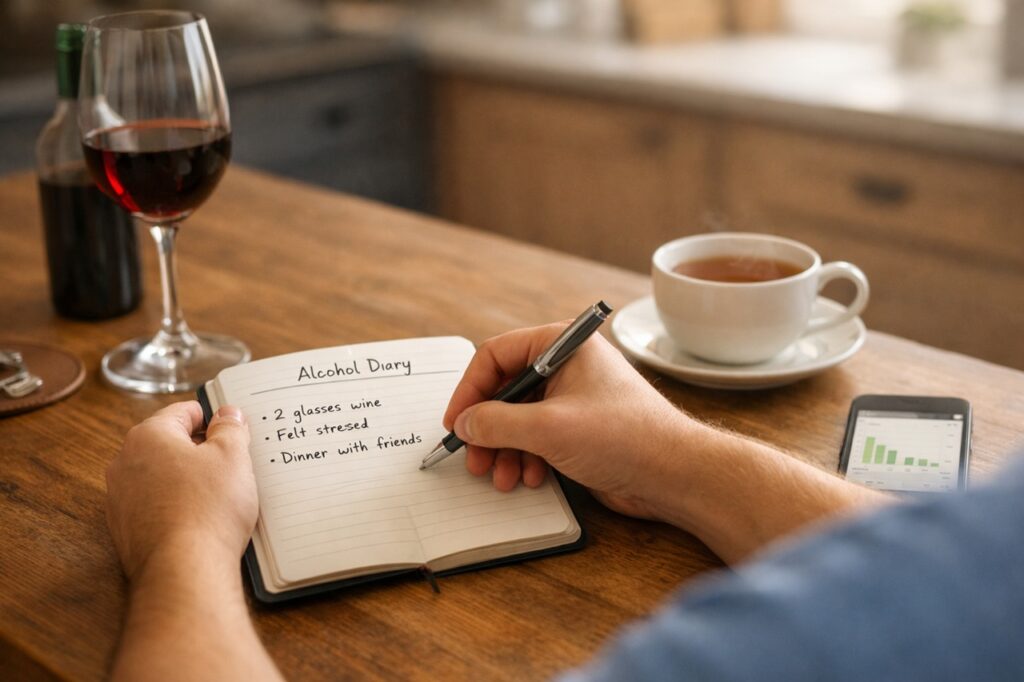
Someone undergoing medically supervised treatment may find it helpful to record drinking days, approximate units consumed, alcohol-free days, heavy-drinking occasions and any side effects.
Instead of asking only, “Do I feel different?”, you can look at whether your actual drinking pattern is changing.
Who Shouldn’t Simply Start Naltrexone?
Naltrexone isn’t suitable for everybody.
One particularly important consideration is opioids.
Because Naltrexone blocks opioid receptors, it can interact significantly with opioid medicines. The source specifically highlights medicines including codeine, tramadol, morphine and methadone, and notes the risk of precipitating withdrawal where someone is opioid-dependent.
Liver and kidney health can also be relevant to prescribing decisions.
This is why an online article can explain what targeted Naltrexone is, but it cannot determine whether targeted Naltrexone is appropriate for you.
That requires proper clinical assessment.
What If You Are Physically Dependent on Alcohol?
This is even more important.
Targeted Naltrexone should not be treated as a DIY method of alcohol withdrawal.
If you experience shaking, sweating or significant anxiety when you haven’t had alcohol, drink in the morning to steady yourself, or believe you may be physically dependent, seek medical advice before suddenly stopping or substantially reducing your alcohol consumption.
Abrupt alcohol withdrawal can cause serious complications, including seizures.
For some people, medically supported withdrawal or specialist alcohol services may be more appropriate than a targeted alcohol-reduction programme.
Targeted Naltrexone and the Drink Less Method
The Drink Less Method is inspired by the pioneering work of John Sinclair and the concepts that became associated with the Sinclair Method, but it is its own clinically guided approach.
Our focus is on suitable adults who are concerned about their alcohol consumption and want to drink less and regain greater control.
That distinction matters.
Someone searching for how to stop drinking alcohol may ultimately decide abstinence is right for them.
Someone else may want to stop drinking every evening.
Another person might want to reduce heavy drinking occasions or regain the ability to stop after a smaller amount.
There isn’t one appropriate treatment objective for everybody.
Likewise, there isn’t one medication or dosing strategy appropriate for every patient.
Could Targeted Naltrexone Help You Drink Less?
For appropriate patients, Naltrexone is one of the medications a qualified clinician can consider when treating alcohol problems.
Targeted Naltrexone is particularly interesting because it approaches the problem through the relationship between medication, alcohol consumption and learned reinforcement rather than simply relying on willpower.
But it isn’t a guaranteed pill to stop drinking.
Naltrexone requires a prescription. Targeted use requires appropriate clinical judgement. Opioid use, physical alcohol dependence, other medicines, liver health and wider medical circumstances can all affect whether treatment is appropriate.
If you’ve repeatedly tried to cut down alcohol, are worried about drinking every night, struggle with alcohol cravings, or simply feel that alcohol is taking up more space in your life than you want it to, finding out about medically supported approaches may be a useful next step.
For some suitable adults, that conversation may include targeted Naltrexone.
For others, a different approach may be safer or more appropriate.
The objective is not simply finding a tablet.
It’s finding an approach that helps you achieve meaningful, sustainable change.
Find Out More About Naltrexone and Drinking Less
The Drink Less Method provides an online pathway for suitable UK adults interested in medically supported alcohol reduction, with treatment subject to independent clinical assessment and prescribing approval.
Learn more about Naltrexone for alcohol, targeted Naltrexone, the Sinclair Method, medication to reduce drinking and ways to regain control over your alcohol consumption.
Find out more: www.drinklessmethod.co.uk
This article provides general information and isn’t a substitute for medical advice. Naltrexone is a prescription-only medicine and isn’t suitable for everyone. Targeted use of Naltrexone differs from its licensed UK dosing regimen. Treatment, dose and timing should be determined by an appropriately qualified prescriber.